Piercing Gun vs Needle: Why Good Studios Won't Use a Gun (2026 UK Guide)
Piercing Gun vs Needle: Why Good Studios Won't Use a Gun (2026 UK Guide)
Last updated 29 October 2026. Written by the Camden Body Jewellery team. How we check our jewellery.
Piercing gun vs needle? If you had your ears done at a shop counter, it was probably a gun. If you went to a piercing studio, it was a needle. Both leave a hole, but in very different ways.
Here's how each one works, why good studios refuse guns, and what UK law says. Plus a checklist for booking.
Already pierced with a gun? Don't worry. Most lobes heal fine, and once healed you can swap to a comfy titanium flat back earring.
Piercing gun vs needle: what's the difference?
A needle cuts a clean, neat hole, while a gun pushes a blunt stud through your skin by force.
A piercing needle is hollow and very sharp. It slides through, and your jewellery follows right behind it. The needle is sterile, used once, then thrown away.
A piercing gun is a spring-loaded tool. It fires the earring stud itself through your ear in one quick snap. The stud has a pointed end, but it is nowhere near as sharp as a needle. The Association of Professional Piercers (APP) says the effect is "more like a crush injury than a piercing".
| Piercing gun | Piercing needle | |
|---|---|---|
| How it makes the hole | Forces a stud through by pressure | Cuts a clean channel, jewellery follows |
| Sharpness | Blunt stud tip | Very sharp, hollow needle |
| Sterilising | Cartridge may be sterile and single-use, but the plastic gun body can't go in an autoclave | Sterile, single-use needle, opened in front of you |
| Jewellery used | Butterfly back stud | Flat back labret (a stud with a flat disc on the back) or ring |
| Room for swelling | Fixed, short stud, no extra room | Longer bar picked for your ear, shortened later |
| Cartilage | Can crack or shatter cartilage | Clean hole, the right tool for cartilage |
| Pain | Hard snap, more swelling after | Quick sharp pinch, lobe about 2 to 3 out of 10 |
| Typical healing | More swelling, bumps and stuck studs are more likely | Cleaner start. Lobe 2 to 3 months, helix 6 to 12 months |
| Who uses it | Some shops, salons and kiosks | Professional piercing studios |
For pain by spot, see our piercing pain chart.
Are piercing guns bad?
Yes, for most people a needle is the better choice, and both big piercing bodies say so.
The APP says only sterile, throwaway equipment is fit for body piercing. The UK Association of Professional Piercers (UKAPP) goes further. It says it does not believe piercing with a gun "is ever a safe thing to do".
The main problems:
- More damage. A blunt stud tears and squashes the skin instead of cutting it. UKAPP says this means more tissue damage, more discomfort and more swelling.
- Harder to keep clean. The plastic gun can't be fully sterilised between people.
- Poor jewellery. Short studs with butterfly backs, not built for a fresh piercing.
- Less training. The APP says gun training is not set to one standard. Sometimes it is just a video, a booklet or practice on a sponge.
Loads of gun-pierced lobes heal just fine. The odds are simply better with a needle.
Why are piercing guns bad for cartilage?
Cartilage is hard and stiff, so a blunt stud can crack or shatter it instead of passing through cleanly.
Your lobe is soft and can take a bit of force. The top of your ear is cartilage (the firm, bendy stuff that gives your ear its shape).
When a gun slams a stud through cartilage, the pressure spreads out. UKAPP says it can "shatter the cartilage", which can leave your ear misshapen for good. The APP lists shattered cartilage, bad scarring and cartilage infections as common problems.
Even without a crack, you get more swelling, and a short stud then presses into your skin. That is a fast track to bumps. If you already have one, our guide on how to get rid of an ear piercing bump will help.
A needle-pierced helix still takes 6 to 12 months to heal. Our helix piercing guide covers the rest.
Can you get your cartilage pierced with a gun?
Some places will still do it, but you shouldn't let them.
No UK law we could find bans it. But the APP and UKAPP are clear that a gun is the wrong tool for cartilage. If a shop offers to gun your helix, walk away.
Are piercing guns hygienic?
Newer guns are cleaner than old ones, but the gun itself still can't be properly sterilised.
To be fair, many modern systems use a sealed, pre-sterilised cartridge that is used once. That is a real step up.
The problem is the gun body. It is usually plastic. The APP says plastic ear piercing guns "cannot be autoclave sterilized". An autoclave is a steam machine that kills every germ on metal tools. UKAPP says guns can't be sterilised between clients, so germs from the last person could still be on it.
At a needle studio, your needle comes from a sealed sterile pack, is used once, then goes in a sharps bin. Reused tools go through the autoclave.
What jewellery do piercing guns use?
Guns use short butterfly back studs with a pointed tip, and they come in one fixed length.
- No room to swell. Fresh piercings puff up. A short stud has nowhere to go, so the back digs in. The APP says gun studs are too short for some lobes and most cartilage.
- Butterfly backs trap gunk. The little curls catch crusty bits and hair. They are hard to clean.
- Pointed tips. The sharp end pokes you when you sleep.
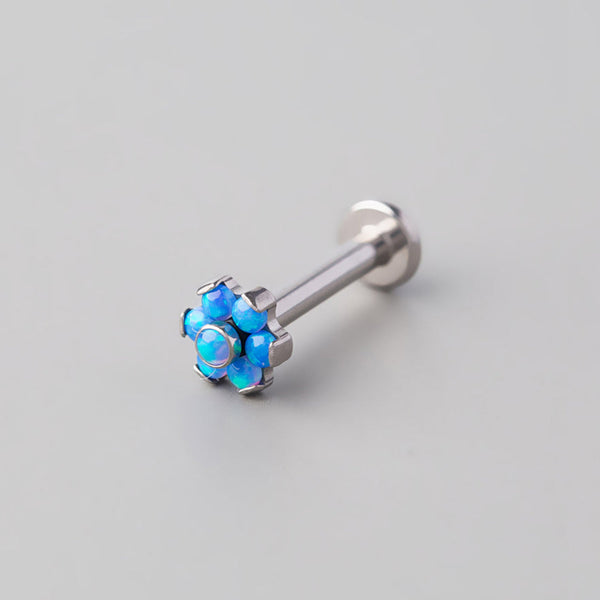
A needle piercer uses a flat back labret instead. It has a smooth flat disc on the back and a longer bar at first. Once the swelling goes down, a piercer swaps it for a shorter bar. We explain the whole design in flat back earrings explained.
Cheap studs can also hold nickel, which makes lots of ears itchy. See our nickel allergy guide for the full story.
Are piercing guns legal in the UK?
Yes, piercing guns are legal in the UK, but the business using them must be registered or licensed with the council.
We found no UK law that bans guns. What the law does control is who can pierce and where. The rules depend on where you live:
- England (outside London): Under section 15 of the Local Government (Miscellaneous Provisions) Act 1982, anyone doing cosmetic piercing must be registered with the council. So must their premises. This applies where the council has adopted the rules, and councils treat ear piercing as cosmetic piercing.
- London: Boroughs license places that offer "special treatment" under the London Local Authorities Act 1991. Cosmetic piercing is on that list.
- Wales: Since 29 November 2024, anyone piercing, including ear piercing, needs a special procedure licence under the Public Health (Wales) Act 2017.
- Scotland: A business offering skin piercing, which includes cosmetic piercing, needs a licence from the council.
Wales has the most detailed rules on guns. Its licence conditions say a cartridge must be sterile and sealed, and must never be reloaded. A reusable piercing tool must be cleaned, disinfected and sterilised before and after each use.
So legal is not the same as best. The law sets a minimum, and a good studio aims higher.
What to ask a studio before you book
Ask these questions. A good studio will happily answer every one.
- Do you use a single-use sterile needle? The only right answer is yes.
- Are you registered or licensed with the council? Ask to see the certificate.
- Do you have an autoclave? Ask how they check it works.
- What metal is your jewellery? Look for implant grade titanium, ASTM F136 (the medical standard for implant grade titanium).
- Will you use a flat back labret with room for swelling? Not a butterfly back.
- Will you downsize the bar later? A good piercer will book you back in.
- Can I see photos of healed piercings?
- Are you a UKAPP member? Not required by law, but a good sign.
If they get cagey or rush you, go elsewhere.
Pierced with a gun already? What to do now
Relax, most gun-pierced lobes heal fine, and you can switch to better jewellery once yours has healed.
- Leave the stud in for now. Taking it out early can let the hole close.
- Keep it clean. Spray with sterile saline (0.9% sodium chloride wound wash) twice a day. No twisting. Skip tea tree oil, alcohol and peroxide.
- Give it time. A lobe takes 2 to 3 months to heal. A helix takes 6 to 12 months.
- Watch for bumps. If one pops up, see our ear bump guide.
- Get help if it looks wrong. Heat, spreading redness, yellow pus or a fever need a doctor, so call your GP or NHS 111.
Once healed, swap the butterfly stud for a titanium flat back labret. It is comfier to sleep on, easier to clean and less likely to snag. Not sure if you're ready? Check when you can change your piercing jewellery.
One tip. Gun studs are often thinner than a standard piercing bar, so a new bar can feel tight. Never force it in. Ask a piercer to check your size first, then match it. Our gauge to mm chart shows how to read size labels.
Not sure of your size? Send us a message and we'll help you pick the right one.
Piercing gun vs needle FAQ
Is needle piercing better than a gun?
Yes. A needle is sharp, sterile and used once, so it makes a clean hole with less damage. A gun forces a blunt stud through, which causes more swelling. Both the APP and UKAPP recommend needles.
Are piercing guns bad for your ears?
They are not the best choice. Guns cause more tissue damage than needles, the gun body can't be steam sterilised, and the studs are short. Many gun-pierced lobes still heal fine, but the risk of problems is higher.
Can you get your cartilage pierced with a gun?
Some places will do it, but you shouldn't. The blunt force can crack or shatter cartilage and cause bad scarring. Always go to a studio that uses a needle for cartilage.
Why don't piercers use guns?
Professional piercers say guns cause too much damage and can't be properly sterilised. Gun studs also leave no room for swelling. A needle and a flat back labret give your piercing a much better start.
Are piercing guns legal in the UK?
Yes. We found no UK law that bans them. But anyone piercing ears as a business must be registered or licensed with their council, and Wales has strict rules on how cartridges are used.
Does a needle hurt more than a gun?
Usually not. A needle is a quick, sharp pinch, and a lobe scores about 2 to 3 out of 10. A gun is a hard snap and tends to cause more swelling and soreness after.
Can a piercing gun be sterilised?
Not fully. Many guns use sealed, single-use cartridges, which helps. But the plastic gun body can't go in an autoclave, so it can't be sterilised the way a studio's metal tools are.
Is a needle better for a child's first ear piercing?
UKAPP says yes. It says guns cause more tissue damage and use jewellery that isn't right for a new piercing. Look for a studio that uses single-use needles and titanium jewellery.
Do I need to get re-pierced if I was pierced with a gun?
Usually not. If your piercing has healed and feels fine, just keep it clean and swap to a titanium flat back. If it is crooked or keeps getting sore, ask a piercer for advice.
How long does a lobe take to heal after a gun piercing?
Plan on 2 to 3 months, the same as a needle lobe. It may swell more at the start. Don't change the jewellery until it has fully healed.
Key takeaways
- In piercing gun vs needle, the needle wins for a cleaner hole and less damage.
- Guns push a blunt stud through by force, which can crack or shatter cartilage.
- Many guns use sterile cartridges, but the plastic gun body can't be autoclaved.
- Gun studs are short with butterfly backs, so there's no room for swelling.
- Guns are legal in the UK, but piercing businesses must be registered or licensed.
- Ask any studio about needles, licensing, their autoclave and ASTM F136 titanium.
- Pierced with a gun? Let it heal, then switch to a titanium flat back labret.
Shop titanium flat back earrings
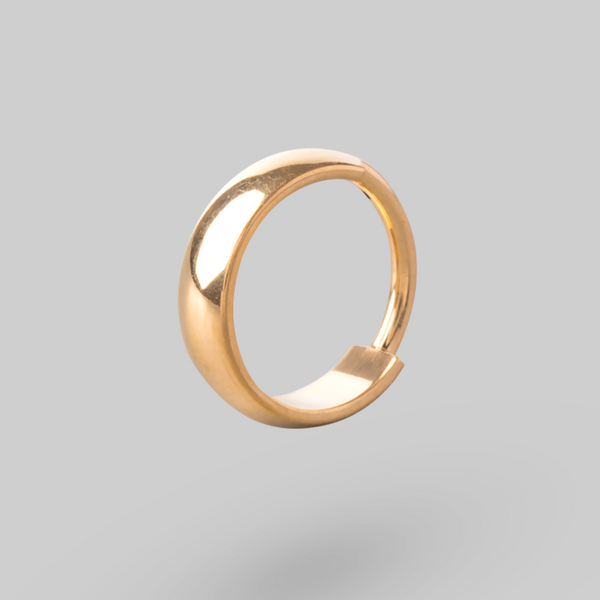
Try the Threadless Labret Bar in Silver from £14. The Bezel Set Clear Stone Top Labret in Silver is from £20. Prefer gold-coloured titanium? Try the Bezel Set Clear Stone Top Labret in Gold from £20. For something cute, the Celeste Heart Labret in Silver is from £24, and the Bumped Cut 5 Leaves Flat Back Labret is from £24.
Browse the full lobe collection, all our titanium flat back earrings, or our flat back earring studs. Everything at Camden Body Jewellery is implant grade titanium (ASTM F136) and sterilised.
Read next
- Flat Back Earrings Explained: Why Piercers Use Labrets, Not Butterfly Backs
- How to Get Rid of an Ear Piercing Bump
- Piercing Pain Chart: Every Piercing Ranked
- Nickel Allergy Earrings: Why Your Ears React
- How Long Do Piercings Take to Heal? Full Healing Time Chart
Sources: Association of Professional Piercers: Piercing Guns, UKAPP: Children's Ear Piercing, Local Government (Miscellaneous Provisions) Act 1982, section 15, Welsh Government: Special procedures, body piercing (including ear piercing)
Stop The Reaction Before It Starts
90% of piercing irritation comes from poor quality metal. Upgrade to ASTM F-136 Implant Grade Titanium-the biocompatible gold standard used by professional piercers worldwide.
Myths vs. Reality
Myth: "Itchiness means infection."
False. Infection usually involves throbbing pain, heat, extreme swelling, and yellow/green pus. Mild itching alone is rarely an infection.
Myth: "Turn the jewelry to scratch the itch."
Never twist! Twisting breaks the healing seal, introduces bacteria inside the wound, and extends healing time by weeks.
Why Shop CBJ?
-

Implant Grade Titanium
ASTM F-136 Compliant
-

Tracked UK Delivery
Free over £40
-

Sterilised Piercing Jewellery
Keeping your skin safe