Helix Piercing: Types, Jewellery, Sizes & Healing Guide (2026)
Helix Piercing: Types, Jewellery, Sizes & Healing Guide (2026)
Last updated 28 October 2026. Written by the Camden Body Jewellery team. How we check our jewellery.
The helix is the most popular cartilage piercing in the UK and the foundation of almost every curated ear. It is versatile, it stacks well, and it sits in a spot that suits studs, hoops and chains equally. It is also a slow healer that punishes impatience, which is why the same questions come up again and again: how much does it hurt, how long does it really take, what size jewellery do I need, and when can I finally change it. This guide answers all of them, with the honest numbers rather than the optimistic ones.
What is a helix piercing?
The helix is the curved outer rim of cartilage that runs from the top of the ear down towards the lobe. A helix piercing passes through that rim, most commonly in the upper third, though the exact placement can sit anywhere along the curve depending on your anatomy and the look you want.
Because it goes through cartilage rather than the soft tissue of the lobe, a helix behaves very differently from a standard ear piercing. Cartilage has no direct blood supply of its own, so it heals slowly, swells more, and is far less tolerant of pressure and knocks. Understanding that one fact explains almost everything else about helix aftercare.
Types of helix piercing
"Helix" covers a family of placements along the rim. The main variations:
| Type | Placement | Pain (out of 10) | Realistic full heal | Notes |
|---|---|---|---|---|
| Standard helix | Upper outer rim | 4 to 6 | 6 to 12 months | The classic. Suits most ears. |
| Double helix | Two piercings stacked on the rim | 5 to 6 each | 6 to 12 months | Best done in one sitting for even spacing, but heals as two separate wounds. |
| Triple helix | Three stacked on the rim | 5 to 6 each | 9 to 12 months, sometimes longer | More swelling and more to protect. Many piercers stage it. |
| Forward helix | Front of the rim, above the tragus, facing forward | 5 to 6 | 6 to 12 months | Anatomy dependent. Full forward helix guide here. |
| Low helix / mid helix | Lower down the rim, towards the lobe | 3 to 5 | 4 to 9 months | Thinner cartilage lower down often heals a little faster. |
If you want a helix that lies flat against the inner part of the ear rather than on the rim, that is a flat piercing, which has its own guide.
How much does a helix piercing hurt?
Most people rate a helix between 4 and 6 out of 10. The needle itself is a sharp, brief pinch and a distinct pressure as it passes through the cartilage, over in a second or two. What catches people out is the afterwards: a hot, throbbing ache for the rest of the day, and an ear that is tender to the touch for two to three weeks.
Compared with other ear piercings, a helix hurts more than a lobe (2 to 3), about the same as a tragus (4 to 6), and less than a rook (5 to 7), an industrial (6 to 7) or a snug (7 to 9). See every piercing ranked in our piercing pain chart. If you can handle a lobe piercing you can handle a helix. It is the aftercare that takes discipline, not the piercing itself.
How long does a helix piercing take to heal?
Plan for 6 to 12 months. Some ears finish nearer 6, many take the full year, and a helix that is slept on or knocked regularly can take longer.
This is the number that most people underestimate, because a helix looks healed long before it is. Within four to six weeks the surface skin closes over the entrance and exit, the weeping stops and the tenderness eases. That is surface healing. Inside the cartilage, the channel is still lining itself with new tissue for months afterwards, and until that lining has toughened the piercing is still an open wound wearing a lid. Change the jewellery too early and you tear that lining, which is why so many helix piercings develop a bump at exactly the point their owner decided they were done.
| Stage | When | What it means |
|---|---|---|
| Swelling and tenderness | Weeks 1 to 3 | Normal. Keep pressure off it and clean twice daily. |
| Surface healed | Weeks 4 to 8 | Looks calm. Not healed. Do not change jewellery yourself. |
| Downsize | Weeks 6 to 12 | Piercer fits a shorter bar once swelling has gone. The most important appointment of the whole process. |
| Fully healed | Months 6 to 12 | Safe to change to decorative jewellery once your piercer confirms it. |
For the month-by-month detail, what is normal at each stage and what is not, read our dedicated guide to how long a helix piercing takes to heal. To see how the helix compares with every other piercing, the full healing time chart lays them all out side by side.
Helix piercing jewellery sizes
Getting the size right matters more on a helix than on almost any other piercing, because a bar that is too long is the single most common cause of cartilage bumps.
| Measurement | Standard | Notes |
|---|---|---|
| Gauge (thickness) | 16g (1.2mm) | The UK standard for helix. Some piercers use 18g (1.0mm) for a finer look, or 14g (1.6mm) for larger rings. |
| Initial bar length | 8mm | Deliberately long to allow for swelling. Occasionally 10mm on thicker rims. |
| Downsized bar length | 6mm | Fitted by your piercer at 6 to 12 weeks. Some ears take 5mm. |
| Ring inner diameter | 8mm to 10mm | Only once fully healed. 8mm sits snug on most helixes, 10mm for a looser hang or thicker rims. |
| Decorative end | 3mm to 4mm | Balls, discs and gems. Larger ends look bolder but catch more. |
Always have your piercer measure you at the downsize rather than guessing. Two millimetres is the difference between a bar that sits flush and one that rocks with every movement.
New to size labels? Our piercing jewellery sizes explained guide shows what gauge, bar length and inner diameter mean.
Helix piercing jewellery styles
| Style | When to wear | Why |
|---|---|---|
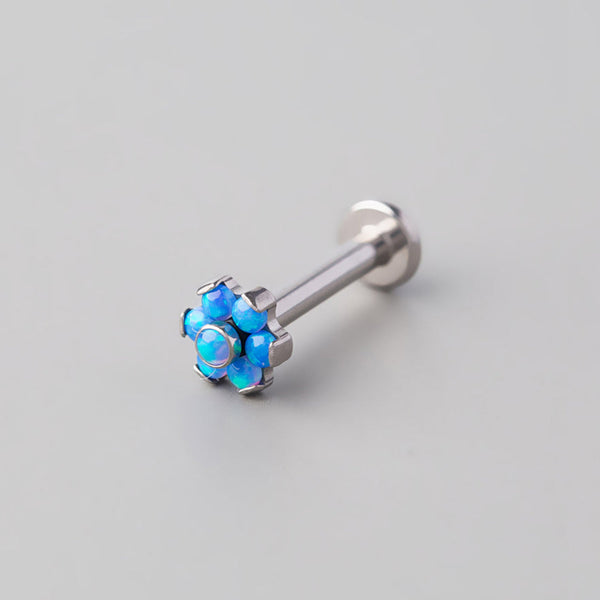
| Flat back labret (threadless or internally threaded) | Initial piercing, healing, everyday | The best healing jewellery. The flat disc sits flush behind the ear, so nothing digs in when you sleep. Threadless pins are easiest to change later. |
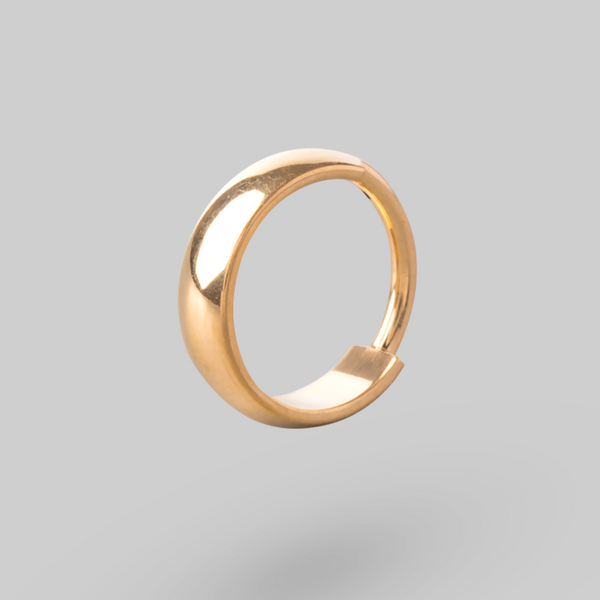
| Segment ring or hinged clicker | Fully healed only | The classic helix hoop. Clickers open on a hinge so you can change them without tools. |
| Seamless ring | Fully healed only | Clean, minimal look. Needs a slight twist to open, so easier on 18g. |
| Curved barbell | Rarely used on a standard helix | Better suited to rook, snug and forward helix. |
| Chain and dangle labrets | Fully healed | A flat back with a decorative chain. Statement piece for a settled helix. |
A note on starting with a hoop: some studios pierce helixes with a ring, and it looks great on day one. It also moves far more than a bar, which means more friction inside a channel that is trying to line itself. If you have a choice, heal in a flat back labret and move to a hoop once it is done. Our guide to threadless labrets explains why they have become the piercer's default.
What material should helix jewellery be?
Implant grade titanium, ASTM F136. It contains no nickel, it is lightweight, and it does not react with a piercing that is inflamed and healing for the best part of a year. Surgical steel is fine for many people once healed, but it does contain nickel and is not what we would put in a fresh cartilage piercing. Plated, mystery-metal and costume jewellery should never go anywhere near a healing helix.
If you have ever had ears that react to earrings, read our guide to nickel allergy and earrings before you get pierced. For the metallurgy, see implant grade titanium vs surgical steel.
How much does a helix piercing cost in the UK?
Most UK studios charge between £25 and £60 for a single helix, and that usually includes a basic piece of titanium starter jewellery. London and other big city studios tend to sit at the upper end or above it, often £40 to £70, and experienced piercers with a strong reputation charge more than high street chains.
Things that push the price up: choosing a decorative piece of jewellery instead of the basic starter, a second helix in the same sitting (double helix packages are common and usually cheaper than two separate visits), and the studio's location. Things that are worth paying for: a needle rather than a gun, implant grade titanium rather than steel, and a piercer who books your downsize appointment before you leave.
The cheapest helix is rarely the cheapest by the end. A gun piercing on cartilage or a nickel-heavy starter stud tends to cost you months of bumps and a re-pierce.
Helix piercing aftercare
The routine is simple. The discipline is the hard part, because you have to keep it up for months after the piercing has stopped looking like it needs it.
- Wash your hands before touching the ear, every time.
- Spray sterile saline (0.9% sodium chloride wound wash) on the front and back of the piercing, twice a day. Let it soak for 30 to 60 seconds.
- Pat dry with clean, lint-free paper towel. Never fluffy towels or cotton buds.
- Do not rotate, twist or move the jewellery. That advice is out of date and causes bumps.
- Keep hair products, make-up and perfume away from the ear.
- Book the downsize for 6 to 12 weeks in.
Avoid tea tree oil, alcohol, hydrogen peroxide, antibacterial soap and any homemade salt water. All of them are too harsh for healing cartilage. Our complete piercing aftercare guide covers the full routine.
Sleeping with a helix piercing
Sleeping on a helix is the number one reason they take longer than they should. Eight hours of pressure a night keeps the piercing in a permanent state of low-level irritation, and most of us roll onto the pierced side without knowing it.
Sleep on the other side or on your back for as long as you can manage. A travel pillow with your ear positioned in the centre gap is the cheapest fix and works surprisingly well. Change your pillowcase often. If you wake up on the piercing, do a saline clean and leave it alone rather than prodding at it. More detail in our guide to sleeping with a cartilage piercing.
Headphones, hats and hair
Over-ear headphones are the enemy of a healing helix. Switch to earbuds that sit in the canal, or keep the cup off the rim if you must use over-ears. Woolly hats, hoods and helmets all press the jewellery into the channel. Tie long hair back until the ear is settled, and be careful with hairbrushes, jumpers and towels, which catch a fresh helix constantly.
Common helix piercing problems
Bumps. The most common helix problem by far. A firm little lump beside the jewellery is nearly always an irritation bump, not a keloid and not an infection. The cause is almost always mechanical: a bar that is still too long, sleeping on it, headphones, or a knock. Fix the cause and it settles over a few weeks. Do not put anything on it, do not pick at it and do not take the jewellery out. Our guide to telling a bump, keloid and infection apart will help you work out what you have.
Prolonged redness or swelling. Normal for the first two to three weeks. If it is still spreading after that, check your pillow and headphones first, then your bar length.
Migration. If the jewellery looks closer to the edge of the rim than it did, the piercing may be moving. See your piercer early. Caught in time it can often be saved with a different bar. Read our guide to piercing rejection for the warning signs.
Infection. Genuinely uncommon with proper cleaning. The signs are thick yellow or green discharge, heat, red streaks spreading from the site, worsening pain and sometimes fever. Speak to your GP. Do not remove the jewellery unless told to, because that can trap the infection inside.
When can you change your helix jewellery?
Two different moments, and they get confused constantly.
The downsize, at 6 to 12 weeks, is done by your piercer. They swap the long starter bar for a shorter one in the same gauge and material once swelling has gone. This is not you changing your jewellery. It is a healing step, and skipping it is the most common reason a helix that was going well starts to bump.
Your first real change, to a hoop or a decorative piece, waits until the piercing is fully healed. For most helixes that is 6 to 12 months, and it should be confirmed by a piercer rather than by how it looks. A helix that has been in a flat back for a year and feels completely normal is ready. A helix that is four months old and looks fine is not.
When you do change it, make sure the new piece is titanium and either sterilised or thoroughly cleaned, and have your piercer do the first change if you are unsure. Threadless pins make later swaps much easier.
Double and triple helix piercings
Stacked helixes are among the most requested ear looks, and they are entirely doable. A few things to know.
- Getting them in the same sitting gives the best spacing, since your piercer can line them up on the same anatomy. It also means two or three fresh cartilage wounds at once, with more swelling and more to protect at night.
- Each piercing heals on its own timeline. Expect the full set to take 9 to 12 months, sometimes longer for a triple.
- Some piercers prefer to stage a triple over two visits so the ear is never dealing with three fresh wounds at once. Either approach is fine if the piercer is good.
- Match the jewellery. Same gauge, same material, ends that sit at the same size. Once healed, mixing hoops and studs across the stack is where the look comes alive.
Helix piercing FAQ
How long does a helix piercing take to heal?
Six to twelve months for a full heal. The surface closes in a few weeks, which fools people, but the channel inside the cartilage keeps developing for most of a year. Do not change jewellery until a piercer confirms it is done.
When can I change my helix jewellery for the first time?
Your piercer downsizes the bar at 6 to 12 weeks. A change to a hoop or decorative piece waits until fully healed, usually 6 to 12 months.
Does a helix piercing hurt more than a lobe?
Yes. Around 4 to 6 out of 10 versus 2 to 3 for a lobe. The piercing itself is brief. The throbbing afterwards and the tenderness over the following weeks are the parts people notice.
Should I get my helix pierced with a hoop or a stud?
A flat back labret stud, ideally. Hoops move more inside the channel and slow healing. Switch to a hoop once it is fully healed.
What gauge is a helix piercing?
Almost always 16g (1.2mm) in the UK. Some studios use 18g (1.0mm). Larger gauges are unusual and only for people who specifically want them.
Can I sleep on my helix piercing?
Not for the first several months. Sleep on the other side or your back, and use a travel pillow so the ear sits in the gap. Sleeping on it is the most common reason helix piercings stall.
Can I wear headphones with a new helix?
Earbuds yes, over-ear headphones no, at least until it is well settled. Over-ears press directly on the rim and are a leading cause of helix bumps.
How much is a helix piercing in the UK?
Roughly £25 to £60 at most studios, including basic starter jewellery. London and premium piercers often sit at £40 to £70 or more.
Why has my helix piercing got a bump?
Nearly always pressure or a bar that is too long. Check whether you are sleeping on it or wearing over-ear headphones, and get the bar measured. Keep cleaning with saline only, and do not put oils or creams on it.
Can I stretch a helix piercing?
Once fully healed, cautiously. Cartilage stretches slowly and does not always cooperate. Go up one size at a time with proper tapers and months between stretches. Many piercers advise against stretching cartilage at all.
Will my helix close if I take the jewellery out?
Yes, and quickly in the first year. Even a day without jewellery can shrink the channel enough to make reinsertion painful or impossible. Well established helixes worn for years are more stable but never permanent.
Can I re-pierce a helix that closed?
Usually, but not immediately. Let the tissue settle fully, typically a few months, then have a piercer assess the scar tissue and angle. Re-piercing straight through fresh scar tissue is more likely to bump.
Key takeaways
- A helix is a cartilage piercing on the outer rim of the ear, usually 16g (1.2mm).
- Pain is 4 to 6 out of 10. Healing is 6 to 12 months, not weeks, even though the surface looks calm early.
- Heal in a flat back titanium labret. Hoops are for once it is done.
- Starter bar 8mm, downsized to 6mm by your piercer at 6 to 12 weeks. That appointment matters more than anything else.
- Sleeping on it and over-ear headphones are the two biggest causes of helix bumps.
- Saline twice a day, no rotating, no tea tree oil, no creams.
- Expect to pay £25 to £60 in the UK. The cheapest option is rarely the cheapest by the end.
Shop helix piercing jewellery
Everything in our helix collection is implant grade titanium (ASTM F136), sterilised and sized for real helix piercings. For healing, start with a threadless labret or an internally threaded labret, both from £14. Once healed, the titanium segment ring from £15 is the classic helix hoop, and the hinged clicker with a CZ front from £24 is our most popular decorative upgrade. Browse the full segment and clicker ring range or the wider ear piercing collection.
Read next
Stop The Reaction Before It Starts
90% of piercing irritation comes from poor quality metal. Upgrade to ASTM F-136 Implant Grade Titanium-the biocompatible gold standard used by professional piercers worldwide.
Myths vs. Reality
Myth: "Itchiness means infection."
False. Infection usually involves throbbing pain, heat, extreme swelling, and yellow/green pus. Mild itching alone is rarely an infection.
Myth: "Turn the jewelry to scratch the itch."
Never twist! Twisting breaks the healing seal, introduces bacteria inside the wound, and extends healing time by weeks.
Why Shop CBJ?
-

Implant Grade Titanium
ASTM F-136 Compliant
-

Tracked UK Delivery
Free over £40
-

Sterilised Piercing Jewellery
Keeping your skin safe