Tragus Piercing: Complete Guide to Jewellery, Healing, Pain & Aftercare (2026 UK)
A tragus piercing passes through the small cartilage flap that covers the ear canal. Pain is rated 4â6/10 â a short, sharp pinch. Healing takes 6â12 months. Start with a 16G titanium flat back labret, then upgrade to a hoop once healed. Clean twice daily with sterile saline. Cost in the UK: £30â£60.
Tragus Piercing: Complete Guide to Jewellery, Healing, Pain & Aftercare (2026 UK)
The tragus piercing sits in one of the most distinctive spots on the ear â that small, thick flap of cartilage right in front of your ear canal. Small enough to be subtle, prominent enough to make a statement, it has become one of the most popular cartilage piercings in the UK, and for good reason.
Whether you are weighing up the pain, confused about jewellery sizes, or curious about the migraine rumours, this is the only guide you need. We have covered everything: anatomy, pain levels, full healing timelines, jewellery types, sizing, aftercare, and the questions that keep coming up on Reddit and Google â all from a UK perspective.
What Is a Tragus Piercing? Anatomy & Placement Types
The tragus (pronounced "tray-gus") is the small, triangular cartilage flap that partially covers the entrance to the ear canal. It is directly in front of the concha bowl and opposite the anti-tragus â a slightly raised ridge above the earlobe.
A standard tragus piercing passes horizontally through the centre of this flap, entering from the outer (visible) surface and exiting on the inner side facing the ear canal. Because the tragus is composed of dense fibrocartilage rather than soft tissue, it requires a practised piercer and a sharp hollow needle â never a gun.
There are three main placements to know about:
- Standard tragus: Through the centre of the cartilage flap. The most common and beginner-friendly option.
- Surface tragus (vertical tragus): Two entry points on the outer surface of the tragus, facing outward like a surface piercing. More visible but carries a higher rejection risk.
- Anti-tragus: Placed through the raised ridge directly opposite â above the earlobe, across the concha. Rarer, often more painful, and not suitable for all ear shapes.
This guide focuses on the standard tragus unless stated otherwise.
Tragus Piercing Pain â What to Actually Expect
Pain is the number one concern for anyone considering a tragus piercing. The honest answer: it hurts less than most people expect, but more than a lobe piercing.
Because the tragus is a dense wedge of cartilage, the piercer needs to apply firm, sustained pressure. You will feel a significant pinch, and for some people a brief burning sensation immediately after. The whole process takes under ten seconds. Most people describe it as a 4â6 out of 10 â uncomfortable rather than agonising.
| Piercing | Pain Score | Notes |
|---|---|---|
| Earlobe | 1â2 | Soft tissue, very quick |
| Helix | 3â5 | Thin cartilage, manageable |
| Tragus | 4â6 | Dense cartilage, firm pressure |
| Conch | 5â7 | Thicker cartilage, longer needle path |
| Daith | 5â7 | Curved, awkward access |
| Industrial | 6â8 | Two cartilage piercings in one session |
A popping or crunching sensation during the needle pass is completely normal â that is just the needle passing through cartilage. It does not indicate anything has gone wrong.
Tips to reduce pain: Eat beforehand so your blood sugar is stable, avoid alcohol for 24 hours prior, and breathe steadily during the procedure. Telling your piercer it is your first cartilage piercing allows them to talk you through each step.
Tragus Piercing Healing Time: The Full Timeline
Cartilage heals significantly slower than soft tissue. While the entry and exit wounds may appear closed and feel comfortable after a few months, the tissue inside takes much longer to fully consolidate. Many people make the mistake of changing their jewellery too early, which sets healing back considerably.
| Stage | Timeframe | What to Expect |
|---|---|---|
| Inflammatory | Weeks 1â3 | Redness, swelling, tenderness. White/clear discharge normal. |
| Proliferative | Months 1â4 | Swelling reduces. Some crusty discharge around the jewellery. Sensitivity persists. |
| Surface healed | Months 3â6 | Looks healed externally. May still be sensitive to pressure. Not ready for jewellery change. |
| Fully healed | Months 6â12 | No pain, discharge, or sensitivity. Safe to downsize or change jewellery. |
| Consolidated | 12+ months | Fully mature fistula. Wider jewellery options available. |
Healing can be slowed by sleeping on the piercing, touching it with unwashed hands, using the wrong cleaning products, or swimming in unchlorinated water. If you experience green or yellow discharge, escalating pain, or a hot lump around the piercing, see a piercer or GP â early treatment of infections is straightforward.
Best Jewellery for a Tragus Piercing
Choosing the right jewellery is the single most important thing you can do to support a smooth heal. The tragus is a high-movement area â it flexes when you talk, yawn, and use earphones â so anything that snags, presses, or moves unnecessarily will cause irritation.
For a Fresh (New) Tragus Piercing
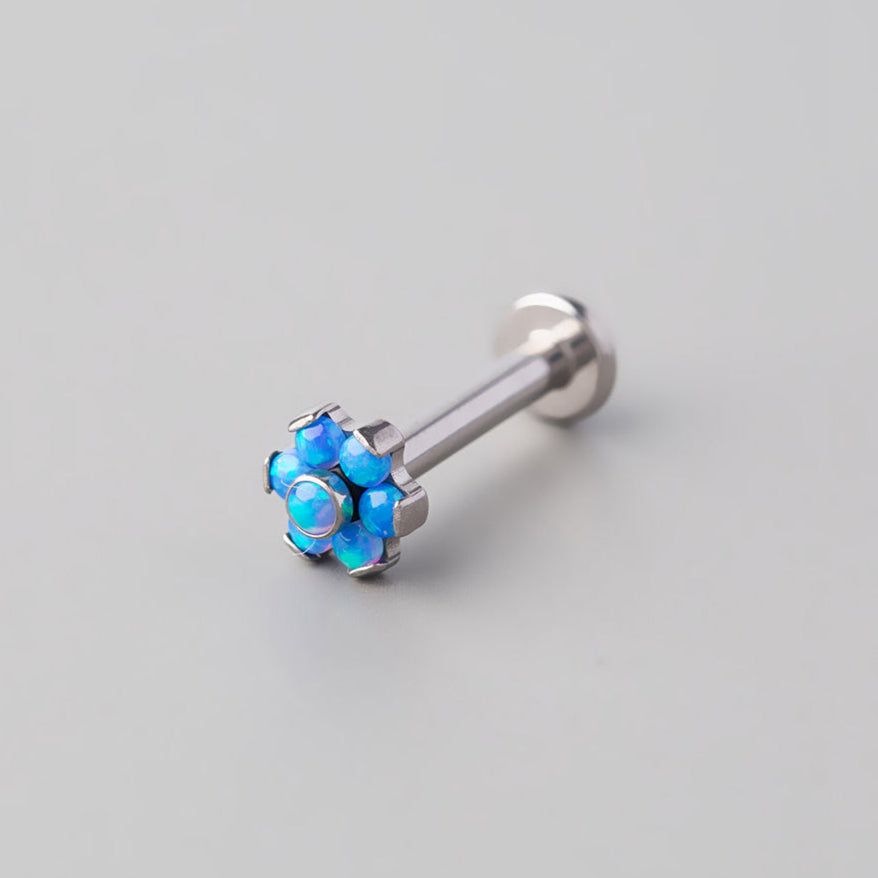
The professional standard for initial tragus piercings is a flat back labret stud in implant-grade titanium (ASTM F136). The flat disc backing sits flush against the inner side of the tragus, so it cannot catch on hair, clothing, or earphones. The small decorative top sits cleanly on the outer surface.
Our Titanium Flat Back Labrets are made from ASTM F136 implant-grade titanium â the same grade used in surgical implants â making them fully biocompatible, lightweight, and nickel-free. From £10.
For a Healed Tragus Piercing
Once your tragus is fully healed (6â12 months), you have far more options. The most popular choices are:
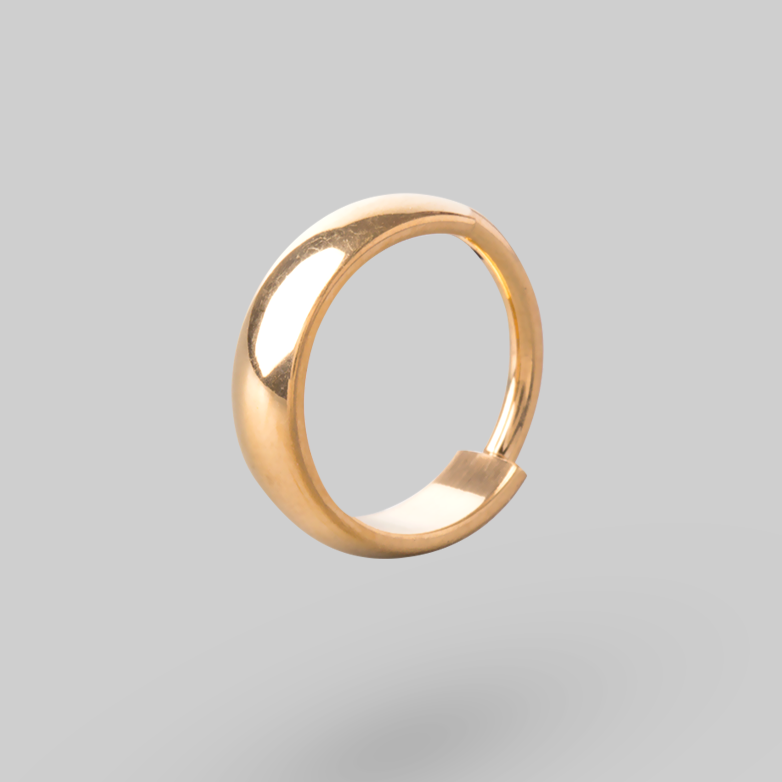
- Segment rings & clicker hoops: A small titanium hoop (6â8mm diameter) wrapping around the tragus is the most photogenic option and the one dominating social media. Seamless and segment rings are easy to open and close at home once healed. Our Titanium Segment Rings come in silver, gold, rose gold, and black â all from £8.
- Threadless titanium labrets: A push-fit top system that lets you swap decorative ends (gems, stars, flowers, opals) without changing the bar. Ideal for building a curated ear look. Threadless Labrets from £10.
- Curved barbells: Less common for tragus but used in surface tragus placements. Our Titanium Curved Barbells are available from £8.
Always avoid: Surgical steel, acrylic, plated metals, and externally threaded jewellery in a healing piercing. Cheap plated metals leach nickel, which is the leading cause of contact dermatitis in piercing wearers.
Tragus Jewellery Sizes Explained
Sizing causes more confusion than almost anything else in the piercing world. Here is exactly what you need to know for a tragus:
| Measurement | Standard (Initial) | Downsized (Healed) |
|---|---|---|
| Gauge (thickness) | 16G (1.2mm) | 16G (1.2mm) |
| Labret length | 8mm (room for swelling) | 6mm (snug fit) |
| Hoop diameter | Not recommended initially | 6â8mm (anatomy-dependent) |
| Material | Implant-grade titanium (ASTM F136) | Titanium, solid 14k gold |
Why 6mm vs 8mm for a hoop? This is one of the most searched questions for tragus piercings. A 6mm hoop sits closer to the ear and looks daintier; 8mm gives more drape and movement. Most people with average-sized tragus find 6mm the most flattering. If your tragus is particularly thick, 8mm allows more comfort. When in doubt, ask your piercer to measure.
Your piercer will pierce at 8mm labret length initially to accommodate post-piercing swelling. This is normal. Wearing a long bar long-term increases the risk of the jewellery being caught and migration, so downsizing at the 3â4 month mark (if healing well) is highly recommended.
Tragus Piercing Aftercare: Step-by-Step
Getting the aftercare right is what separates a smooth 6-month heal from a drawn-out 18-month nightmare. The good news is it is simple â you just need to be consistent.
- Wash your hands first, always. Never touch your piercing with unwashed hands. This is non-negotiable.
- Clean twice a day with sterile saline. Use a 0.9% sodium chloride sterile wound wash (available from pharmacies). Spray directly onto the piercing or apply with a clean cotton pad. Hold for 30â60 seconds.
- Remove crusting gently. Softened crust around the jewellery can be removed with a saline-dampened cotton bud. Never force or pick at dry crust.
- Let it air dry. Pat dry with clean paper towel â never a reusable towel, which harbours bacteria.
- Leave it alone. Do not rotate, twist, or fidget with the jewellery. Every movement disrupts the healing fistula.
What to avoid during healing:
- Alcohol, hydrogen peroxide, antiseptic creams (Savlon, Dettol) â all damage healing tissue
- Swimming in pools, lakes, or the sea for the first 3 months
- In-ear earphones that press against the tragus
- Sleeping on the piercing side (use a travel pillow with a hole)
- Changing jewellery before fully healed
- Hair products, perfume, or dry shampoo touching the area
An irritation bump â a small, fluid-filled bump next to the piercing â is not an infection. It is usually caused by pressure, movement, or poor-quality jewellery. Switch to a higher-quality titanium piece, remove the pressure source, and it typically resolves within a few weeks. If the bump is hot, red, and painful with yellow-green discharge, see a professional â that is infection territory.
Does a Tragus Piercing Help With Migraines or Anxiety?
This question gets asked constantly, and it deserves an honest answer.
The theory is rooted in acupressure and traditional Chinese medicine â specifically the idea that stimulating points on the ear (auriculotherapy) can influence the nervous system. The tragus sits near the auricular branch of the vagus nerve, and some practitioners suggest that consistent stimulation of this area may help regulate the autonomic nervous system, potentially easing migraines, anxiety, and even nausea.
The same theory circulates around the daith piercing (which targets the innermost cartilage fold). Anecdotally, both have passionate communities of people who say their migraines reduced after piercing.
The scientific reality: There is currently no peer-reviewed clinical evidence confirming that tragus or daith piercings reliably reduce migraines or anxiety. The most likely explanation for positive outcomes is the placebo effect combined with the general calming influence of any new piercing ritual on the nervous system.
If you want a tragus piercing because you love how it looks â go for it. If you are getting one purely as a migraine treatment, speak to a neurologist first. It is a beautiful piercing; it may just not be a proven medical treatment.
Tragus vs Anti-Tragus: What Is the Difference?
The anti-tragus is the raised cartilage ridge directly opposite the tragus â it sits just above the earlobe, curving over the lower concha. In most ears it is noticeably smaller than the tragus, and not all anatomy can accommodate a piercing there.
| Tragus | Anti-Tragus | |
|---|---|---|
| Location | Front of ear canal | Above earlobe, opposite tragus |
| Popularity | Very common | Less common, anatomy-dependent |
| Pain level | 4â6/10 | 5â7/10 |
| Healing time | 6â12 months | 6â12 months |
| Rejection risk | Low | Moderate (smaller cartilage mass) |
| Best jewellery | Flat back labret, segment ring | Curved barbell, small segment ring |
If you are drawn to the anti-tragus, have a consultation with an experienced piercer first. They will tell you whether your anatomy supports it. Not all piercers will pierce an anti-tragus that is too small or flat â a reluctant piercer is a good piercer.
Tragus Piercing Cost in the UK (2026)
Pricing varies significantly by region and studio reputation. Here is a realistic breakdown:
| Location/Type | Typical Cost (incl. basic starter jewellery) |
|---|---|
| Budget UK high street studio | £25â£35 |
| Mid-range reputable studio (most UK cities) | £35â£55 |
| Premium studio / London | £50â£80 |
| Upgrade to implant-grade titanium jewellery (at studio) | +£10â£30 (buying online is significantly cheaper) |
Our advice: do not choose a piercer on price. A tragus done badly by an under-qualified piercer is far more expensive to fix than the saving you made upfront. Look for APP or UKAPP membership, an autoclave on-site, and a clean, professional environment.
Once healed, buying your replacement jewellery online is where you save money â our implant-grade titanium pieces start from £8, compared to £20â£40 for the same quality at a studio.
Frequently Asked Questions About Tragus Piercings
How much does a tragus piercing hurt?
Most people rate it 4â6 out of 10. Expect a firm pressure and a quick sharp pinch as the needle passes through the dense cartilage. The discomfort is brief â the whole procedure takes under 30 seconds.
How long does a tragus piercing take to heal?
Between 6 and 12 months for full internal healing. The outer wound appears healed sooner (3â4 months), but the tissue inside takes much longer. Do not change your jewellery before 6 months minimum.
What jewellery is best for a tragus piercing?
A 16G flat back titanium labret stud is the professional standard for new piercings. Once healed, small titanium segment rings and threadless labrets are the most popular upgrades.
What size jewellery do I need for a tragus piercing?
Standard gauge is 16G (1.2mm). Initial labret length 8mm, downsized to 6mm once healed. Hoops are typically 6â8mm diameter depending on your anatomy.
Does a tragus piercing help with migraines or anxiety?
Anecdotally yes, according to many people â but there is no robust clinical evidence. The theory relates to vagus nerve stimulation and auriculotherapy. Get it for the look; any other benefit is a bonus.
Can I sleep on a tragus piercing?
Not for the first 6â12 months. Use a travel pillow with a hole to keep pressure off the ear during sleep. Consistent pressure is one of the most common causes of irritation bumps and delayed healing.
How do I clean a tragus piercing?
Twice daily with sterile saline (0.9% sodium chloride). Do not use alcohol, Dettol, or antiseptic creams. Do not twist the jewellery. Pat dry with clean paper towel.
Can I wear earphones or headphones with a tragus piercing?
Over-ear headphones are fine from the start. In-ear earbuds should be avoided for at least 2â3 months as they press directly on the tragus. Many people can return to earbuds after 3â4 months if healing well.
What is the difference between a tragus and anti-tragus piercing?
The tragus is the flap covering the ear canal; the anti-tragus is the raised ridge above the earlobe directly opposite. The anti-tragus is rarer, slightly more painful, and not possible for all ear anatomies.
How much does a tragus piercing cost in the UK?
Expect to pay £30â£60 at a reputable UK studio. London and premium studios may charge up to £80. Jewellery upgrades for healed piercings are far cheaper online â from £8 at Camden Body Jewellery.
✅ Key Takeaways
- Tragus piercings rate 4â6/10 for pain â firm pressure, quick pinch, over in seconds
- Full healing takes 6â12 months â hever change jewellery before 6 months
- Start with a 16G flat back titanium labret (8mm length) for new piercings
- Upgrade to 6â8mm segment rings or threadless labrets once healed
- Clean twice daily with sterile saline â hothing else needed
- Avoid sleeping on it, in-ear earbuds, and any non-titanium jewellery during healing
- Migraine/anxiety benefits are anecdotal only â no clinical proof
- Cost: £30â£60 at a reputable UK studio; jewellery upgrades from £8 online
Ready to shop? Browse our full range of implant-grade titanium tragus jewellery â all made from ASTM F136 titanium, UK-stocked, and starting from £8. If you have questions about sizing or jewellery choice, drop us a message at enquiries@camdenbodyjewellery.co.uk.
Read next: The Complete Guide to Conch Piercing Jewellery | Daith Piercing: Complete Guide | Helix Piercing Guide
Stop The Reaction Before It Starts
90% of piercing irritation comes from poor quality metal. Upgrade to ASTM F-136 Implant Grade Titanium-the biocompatible gold standard used by professional piercers worldwide.
Myths vs. Reality
Myth: "Itchiness means infection."
False. Infection usually involves throbbing pain, heat, extreme swelling, and yellow/green pus. Mild itching alone is rarely an infection.
Myth: "Turn the jewelry to scratch the itch."
Never twist! Twisting breaks the healing seal, introduces bacteria inside the wound, and extends healing time by weeks.
Why Shop Camden?
-

Implant Grade Titanium
ASTM F-136 Compliant
-

Tracked UK Delivery
Free over £40
-

Sterilised Piercing Jewellery
Keeping your skin safe