Smiley Piercing: Complete Guide to Pain, Healing, Jewellery & Aftercare (2026)
The smiley piercing (also called a frenulum piercing or scrumper) has surged in popularity in 2026, partly thanks to its spotlight on the world stage and partly because it offers something most piercings cannot: a flash of sparkle that only appears when you smile. It sits hidden behind your upper lip most of the time, making it a favourite among people who want body jewellery they can keep subtle.
But this is not a piercing to rush into. Because it sits inside the mouth and passes through delicate tissue, there are important things to understand before you book your appointment. This guide covers everything from pain and healing to the best jewellery choices and long-term dental considerations, so you can make a fully informed decision.
What Exactly Is a Smiley Piercing?
A smiley piercing passes through the upper lip frenulum, which is the small, thin fold of mucous membrane that connects the inside of your upper lip to your upper gum, just above your two front teeth. If you curl your upper lip upward in front of a mirror, you will see this thin web of tissue.
The piercing is placed through the thinnest part of this tissue, and when healed, the jewellery rests against the front of your upper gum and teeth. Because the frenulum sits entirely inside the mouth, the piercing is completely hidden when your lips are closed. It only becomes visible when you smile widely or laugh, which is exactly where the name comes from.
Smiley Piercing Pain: How Much Does It Hurt?
Good news here. The smiley piercing is widely considered one of the least painful piercings you can get. Most people rate it between 2 and 3 out of 10 on a pain scale.
There are a few reasons for this. The frenulum is extremely thin tissue with relatively few nerve endings. The needle passes through very quickly, and the whole procedure typically takes just a second or two of actual piercing time. Many people describe the sensation as a brief, sharp pinch followed by mild pressure, rather than sustained pain.
That said, your eyes will likely water involuntarily (this is a reflex response from the nose and upper lip area), and you may feel some throbbing or tenderness for the first day or two. Swelling of the upper lip is common in the first 48–72 hours.
Smiley Piercing Pain Compared to Other Piercings
| Piercing Type | Pain Level (1–10) | Notes |
|---|---|---|
| Smiley (Frenulum) | 2–3 | Very thin tissue, quick procedure |
| Earlobe | 1–2 | Soft tissue, minimal discomfort |
| Nostril | 3–4 | Cartilage involvement, eye watering common |
| Helix | 4–5 | Cartilage piercing, pressure sensation |
| Tongue | 3–5 | Thick muscle tissue, significant swelling |
| Daith | 5–6 | Thick cartilage, longer procedure |
| Industrial | 6–7 | Two cartilage punctures in one session |
Smiley Piercing Healing Time: What to Expect
The smiley piercing heals relatively quickly compared to cartilage piercings. Most people can expect a healing window of 4 to 12 weeks, though full tissue maturation may take a little longer.
The mouth is one of the fastest-healing areas of the body. Saliva contains natural antibacterial enzymes and growth factors that promote tissue repair, and the oral mucosa has an excellent blood supply. This means that surface healing often happens within the first 4–6 weeks, with the tissue fully strengthening and settling over the following weeks.
Healing Timeline Week by Week
Days 1–3: Expect swelling of the upper lip, mild tenderness, and possibly some minor bleeding. This is the most uncomfortable phase. Stick to soft foods and avoid hot drinks.
Days 4–7: Swelling begins to reduce. You will start to get used to the feeling of the jewellery against your gum and teeth. Speaking should feel more natural.
Weeks 2–4: The piercing should feel significantly more comfortable. Surface healing is well underway. Continue your aftercare routine diligently during this phase.
Weeks 4–8: Most people consider their smiley piercing healed by this point. The tissue around the jewellery should look healthy and feel settled.
Weeks 8–12: Full maturation of the frenulum tissue. If you have experienced no complications, the piercing channel is now well established.
Smiley Piercing Aftercare: How to Look After Your Frenulum Piercing
Aftercare for a smiley piercing differs from external piercings because you are dealing with an oral environment. Here is what you need to do to keep your piercing healthy and infection-free.
Daily Aftercare Routine
Rinse with saline solution 2–3 times daily. Use a sterile saline wound wash or make your own by dissolving ¼ teaspoon of non-iodised sea salt in 240ml of warm distilled or boiled water. Swish gently for 30 seconds after meals and before bed.
Maintain excellent oral hygiene. Brush your teeth twice daily with a soft-bristled toothbrush, being careful around the piercing site. Use an alcohol-free mouthwash; alcohol-based products can dry out the tissue and slow healing.
Avoid touching or playing with the jewellery. This is one of the most common mistakes. Fiddling with the jewellery using your tongue or fingers introduces bacteria and increases the risk of rejection and dental damage.
What to Avoid During Healing
During the healing period, you should avoid spicy, acidic, or very hot foods and drinks for the first 1–2 weeks. Smoking and vaping should be avoided entirely, as they dramatically slow oral healing and increase infection risk. Do not use alcohol-based mouthwash. Avoid kissing and oral contact during the initial healing phase. Do not share cutlery, cups, or straws with others.
For a more detailed look at general piercing aftercare principles, have a read of our complete piercing aftercare guide.
Best Jewellery for a Smiley Piercing
Choosing the right jewellery is critical for a smiley piercing, not just for aesthetics but for protecting your teeth and gums. Because the jewellery sits against the front of your upper teeth and gum line, the wrong choice can cause real damage over time.
Jewellery Types
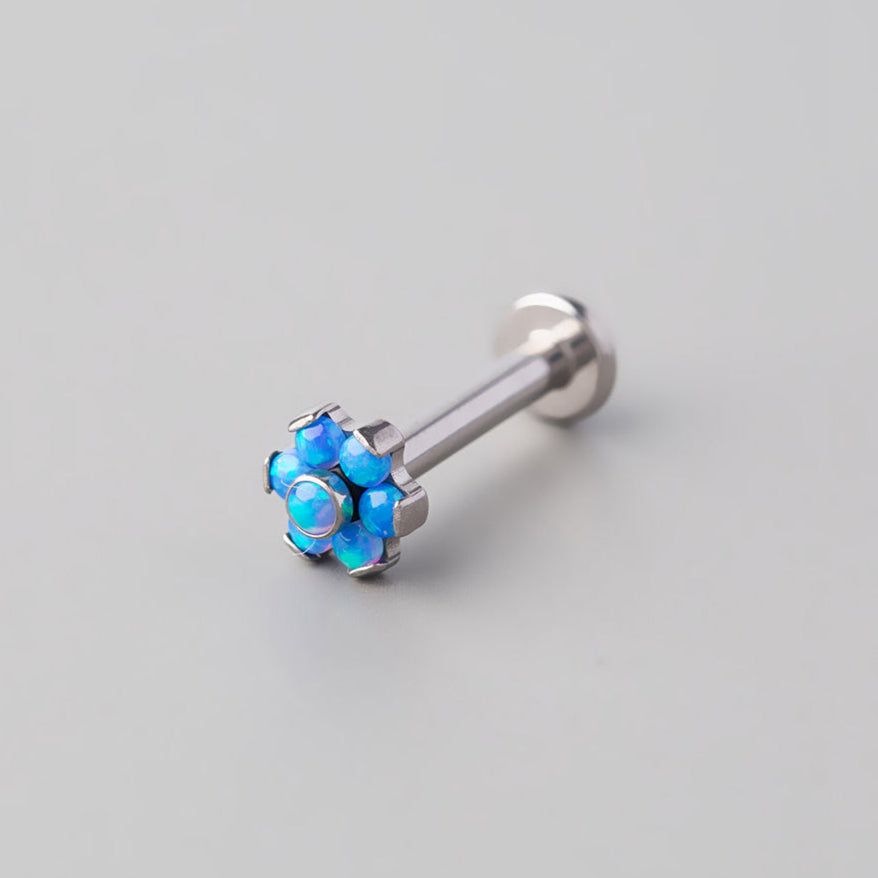
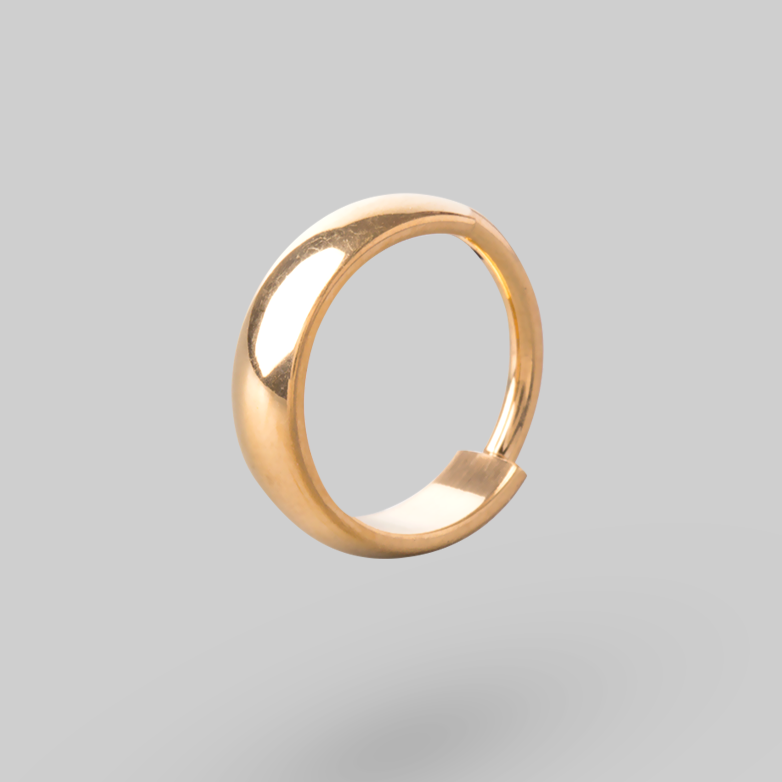
The two most popular styles for smiley piercings are captive bead rings (CBRs) and circular barbells (horseshoe rings). Captive bead rings are the most common starter jewellery. They sit flush against the gum and provide a subtle flash of metal when you smile. Circular barbells offer a slightly more decorative look, with two visible beads or ends that sit against your upper teeth.
Some people also opt for seamless segment rings once healed, which provide a clean, continuous hoop look. For more on how segment rings work, check out our guide on how to wear segment rings.
Jewellery Materials: What Is Safe Inside Your Mouth?
| Material | Suitability | Why |
|---|---|---|
| Implant-Grade Titanium (ASTM F136) | ✓ Excellent | Lightweight, hypoallergenic, biocompatible, nickel-free |
| 14k or 18k Solid Gold | ✓ Excellent | Biocompatible, luxurious finish, safe for oral use |
| Niobium | ✓ Good | Hypoallergenic, can be anodised for colour |
| Surgical Steel (ASTM F138) | ✓ Acceptable | Widely used, but contains trace nickel |
| Acrylic/Bioflex | ▵ Use with caution | Softer on teeth, but can harbour bacteria |
| Plated or Mystery Metal | ✗ Avoid | Plating chips off, unknown alloys risk reaction |
Implant-grade titanium is the gold standard for smiley piercings. It is lightweight (which matters when the jewellery sits against delicate gum tissue), completely hypoallergenic, and approved for long-term body contact. To learn more about why material matters, read our guide on implant-grade titanium vs surgical steel.
Jewellery Size
Smiley piercings are typically pierced at 16 gauge (1.2mm) or occasionally 18 gauge (1.0mm). The diameter of the ring is usually 8mm or 10mm, depending on the size of your frenulum and the anatomy of your upper lip. Your piercer will assess this during consultation and choose a size that sits comfortably without putting excess pressure on the tissue.
Starting with a slightly larger diameter is common to accommodate initial swelling, with a downsize to a snugger fit once healing is complete.
Risks and Dental Considerations
This is the section that sets smiley piercings apart from most other body piercings. Because the jewellery sits directly against your teeth and gum tissue, there are genuine dental health considerations that you need to weigh up before getting pierced.
Enamel Erosion and Tooth Damage
The most commonly discussed risk is enamel wear. Metal jewellery constantly resting against and rubbing on the front surface of your upper front teeth can gradually wear down the enamel over months and years. This is particularly true with larger or heavier jewellery, or if you have a habit of playing with the piercing using your tongue.
Enamel does not regenerate. Once it is worn away, it is gone permanently. This can lead to increased tooth sensitivity, a higher risk of cavities on the affected teeth, and cosmetic changes to the tooth surface.
Gum Recession
The jewellery can also irritate the gum line where it makes contact, potentially contributing to gum recession over time. Receding gums expose the root surfaces of teeth, which are softer than enamel and more vulnerable to decay and sensitivity. If you already have any gum recession or periodontal concerns, a smiley piercing is generally not recommended.
Rejection and Migration
The frenulum is one of the thinnest tissues in the body, which means smiley piercings have a higher rejection rate than most piercings. The body may gradually push the jewellery out over time, causing the piercing to migrate forward through the tissue until it eventually falls out. This is not a sign of poor aftercare; it is simply the nature of the anatomy.
Many people keep their smiley piercing for 1–5 years before it either rejects naturally or they choose to remove it. Some are luckier and keep theirs much longer, but it is realistic to think of this as a semi-permanent piercing rather than a lifelong one.
For a deeper look at how to spot and handle rejection, read our guide on piercing rejection: signs, causes, and prevention.
Infection
The mouth is home to hundreds of species of bacteria, which means any oral piercing carries an infection risk. Signs of infection include persistent swelling beyond the first week, yellow or green discharge, a foul taste in the mouth, increasing pain rather than decreasing, and fever. If you notice any of these, see your piercer or a medical professional promptly.
Who Should (and Shouldn’t) Get a Smiley Piercing?
A smiley piercing may be a good fit if you have a sufficiently thick and developed frenulum (your piercer will assess this), you have good oral health with no active gum disease, you are comfortable with the idea that the piercing may not be permanent, and you are prepared to maintain diligent oral hygiene.
You should avoid a smiley piercing if you currently wear braces or other fixed orthodontic appliances, you have gum disease, receding gums, or significant enamel wear, your frenulum is very small or thin (not enough tissue to support the piercing), or you have dental sealants or bonding on your upper front teeth that could be damaged.
A reputable piercer will always examine your anatomy first and will turn you away if your frenulum is not suitable. This is a sign of a good piercer, not a reason to find someone less careful.
The Smiley Piercing Procedure: What Happens at the Studio
Understanding the process beforehand can help ease any nerves. Here is a step-by-step overview of what to expect.
Step 1: Consultation and anatomy check. Your piercer will examine your frenulum to ensure it is large enough and thick enough to support the piercing safely. They will discuss jewellery options and answer your questions.
Step 2: Preparation. You may be asked to rinse with an antibacterial mouthwash. The piercer will sterilise the jewellery and prepare the needle (typically a 16-gauge hollow needle).
Step 3: Marking. Using a sterile marker, the piercer will mark the entry and exit points on your frenulum. You will be shown the placement and asked to approve it.
Step 4: Clamping (optional). Some piercers use a small clamp to hold the frenulum in place, while others perform it freehand. Both methods are standard.
Step 5: Piercing. The needle passes through the frenulum in a single, swift motion. This is the part that takes just a second or two. The jewellery is then inserted immediately following the needle.
Step 6: Aftercare briefing. Your piercer will give you specific aftercare instructions. Follow these closely, even if they differ slightly from general advice online, because your piercer has assessed your specific anatomy.
How to Minimise Dental Damage from a Smiley Piercing
If you do decide to go ahead, there are practical steps you can take to reduce the impact on your teeth and gums.
Choose the smallest, lightest jewellery that fits comfortably. A snug-fitting ring causes less movement and friction against teeth than an oversized one. Opt for implant-grade titanium, which is the lightest commonly available metal for body jewellery. Avoid playing with the jewellery with your tongue; this is the single biggest controllable factor in preventing enamel damage. Schedule regular dental check-ups so your dentist can monitor for early signs of enamel wear or gum recession. Consider removing the piercing if your dentist identifies any developing damage. It is not worth compromising your long-term dental health.
Smiley Piercing vs Other Oral Piercings
Wondering how the smiley compares to other oral piercing options? Here is a quick comparison.
| Piercing | Location | Pain (1–10) | Healing Time | Dental Risk |
|---|---|---|---|---|
| Smiley | Upper frenulum | 2–3 | 4–12 weeks | Moderate to high |
| Tongue | Centre of tongue | 3–5 | 4–6 weeks | Moderate |
| Labret | Below lower lip | 3–4 | 6–10 weeks | Low to moderate |
| Medusa (Philtrum) | Above upper lip | 4–5 | 8–12 weeks | Low to moderate |
| Monroe | Upper lip (left side) | 3–4 | 6–12 weeks | Low |
| Ashley | Through lower lip | 4–5 | 12–16 weeks | Low |
The smiley is unique among oral piercings for its combination of low pain but higher dental risk. If dental concerns are a priority for you, a labret or Monroe may offer a similar aesthetic impact with less contact against teeth. For a full breakdown of lip piercing options, explore our complete lip piercing guide.
Key Takeaways
- The smiley piercing passes through the upper lip frenulum and is only visible when you smile.
- Pain is very low (2–3 out of 10) and healing takes 4–12 weeks.
- Implant-grade titanium is the best material for oral piercings; it is lightweight and biocompatible.
- Dental risks are real: enamel erosion, gum recession, and tooth damage can occur over time.
- The frenulum is thin tissue, so rejection rates are higher than with most piercings.
- Many people keep a smiley piercing for 1–5 years before it migrates or is removed by choice.
- Avoid playing with the jewellery, maintain excellent oral hygiene, and attend regular dental check-ups.
- Not everyone’s anatomy is suitable; a good piercer will check your frenulum before proceeding.
Smiley Piercing FAQ
How long does a smiley piercing take to heal?
Most smiley piercings heal within 4 to 12 weeks. The mouth heals faster than most areas of the body thanks to the antibacterial properties of saliva and strong blood supply to the oral tissue. However, full tissue maturation can take up to 3 months.
Does a smiley piercing damage your teeth?
It can. The metal jewellery rests against the enamel of your upper front teeth, and over time this contact can cause enamel wear, increased sensitivity, and even chipping. Choosing lightweight, snug-fitting titanium jewellery and avoiding playing with it significantly reduces this risk.
Can everyone get a smiley piercing?
No. Your frenulum needs to be thick and large enough to support the piercing. People with a very thin or small frenulum, active gum disease, braces, or dental bonding on the front teeth are generally advised against it. A professional piercer will assess your anatomy at consultation.
How much does a smiley piercing cost in the UK?
Pricing varies depending on the studio, the piercer’s experience, and the jewellery you choose. We recommend contacting reputable studios in your area for a quote. Always prioritise the piercer’s skill and hygiene standards over finding the cheapest option.
Can I eat normally with a smiley piercing?
For the first 1–2 weeks, you should stick to soft foods and avoid anything very spicy, acidic, or hot. After the initial healing phase, most people eat normally without issues, though you should always be mindful of hard or crunchy foods that could snag or knock the jewellery.
Will a smiley piercing set off metal detectors?
Very unlikely. The amount of metal used is tiny, and modern airport security scanners are calibrated for much larger metallic objects. You should not need to remove your smiley piercing for airport security.
How do I know if my smiley piercing is rejecting?
Signs of rejection include the jewellery appearing to sit further forward in the tissue than when it was pierced, the tissue between the entry and exit points looking thinner or more translucent, and the frenulum appearing to shrink around the jewellery. If you notice these signs, consult your piercer promptly.
Can I change the jewellery myself?
Wait until the piercing is fully healed (at least 8–12 weeks) before changing jewellery for the first time. Working inside the mouth can be fiddly, so many people prefer to have their piercer swap the jewellery for them. If you do it yourself, make sure your hands are thoroughly clean and the new jewellery is sterilised.
Is a smiley piercing permanent?
Smiley piercings are best thought of as semi-permanent. Because the frenulum is thin, many piercings eventually migrate or reject over a period of months to years. Some people keep theirs for five years or more, while others may see migration within the first year. If removed, the hole typically closes quickly.
Can I smoke or vape with a smiley piercing?
You should avoid smoking and vaping entirely during the healing period. Smoke and vapour introduce chemicals and heat into the mouth that slow healing and increase infection risk. If you smoke long-term, be aware that this also increases the risk of gum recession around the piercing.
Browse Smiley Piercing Jewellery at Camden Body Jewellery
At Camden Body Jewellery, we stock a wide range of implant-grade titanium and surgical steel rings suitable for smiley piercings. Whether you prefer a classic captive bead ring or a sleek segment ring, our collection is designed with quality, safety, and style in mind.
Browse our full range of lip and oral piercing jewellery to find the perfect piece for your smiley piercing. All our body jewellery is sterilised and ready to wear.
Read Next
Stop The Reaction Before It Starts
90% of piercing irritation comes from poor quality metal. Upgrade to ASTM F-136 Implant Grade Titanium-the biocompatible gold standard used by professional piercers worldwide.
Myths vs. Reality
Myth: "Itchiness means infection."
False. Infection usually involves throbbing pain, heat, extreme swelling, and yellow/green pus. Mild itching alone is rarely an infection.
Myth: "Turn the jewelry to scratch the itch."
Never twist! Twisting breaks the healing seal, introduces bacteria inside the wound, and extends healing time by weeks.
Why Shop Camden?
-

Implant Grade Titanium
ASTM F-136 Compliant
-

Tracked UK Delivery
Free over £40
-

Sterilised Piercing Jewellery
Keeping your skin safe