How Long Does a Helix Piercing Take to Heal? Full Timeline & Tips
How Long Does a Helix Piercing Take to Heal? Full Timeline & Tips
Quick answer: A helix piercing takes 6 to 12 months to fully heal. It may look healed after 2 to 3 months, but the cartilage underneath continues repairing for much longer. Some people take up to 18 months - especially if they sleep on the ear, change jewellery too soon, or use low-quality metal. Patience and consistent aftercare are everything with helix piercings.
The helix is one of the most popular ear piercings in the UK - and also one of the most misunderstood when it comes to healing. Unlike lobe piercings, which heal in 6 to 8 weeks, helix piercings go through cartilage: dense, avascular tissue with limited blood supply and a slow, temperamental healing process.
Whether you just got pierced, you're months into healing and frustrated by a bump, or you're wondering when you can finally change to that gorgeous segment ring you've been eyeing - this guide gives you the complete, honest picture. No vague timelines. Just real, specific information based on how cartilage tissue actually heals.
Why Does a Helix Piercing Take So Long to Heal?
The short answer is blood supply. Soft tissue like your earlobe heals quickly because it's rich with blood vessels that deliver oxygen, nutrients, and immune cells to the wound. Cartilage - the firm, rubbery tissue that makes up the upper ear - has far fewer blood vessels. Healing is slower, the wound is more vulnerable to disruption, and setbacks take much longer to recover from than they would in a lobe piercing.
A helix piercing also sits in a location that gets a lot of incidental contact: pillows, headphones, hair, hats, towels. Every bit of snagging or pressure is a minor trauma that resets the clock slightly. This is why the realistic healing timeline for a helix is measured in months, not weeks.
Helix Piercing Healing Timeline: Month by Month
Here is what to expect at each stage of healing. Note that "healed" and "fully healed" are different things - most people skip ahead to the former and are surprised when problems occur.
| Stage | Timeframe | What's Happening | What You'll Notice |
|---|---|---|---|
| Inflammatory phase | Weeks 1–4 | Your immune system sends blood flow to the wound. The body seals the piercing channel and begins building a fistula. | Redness, warmth, swelling, tenderness, clear or white-yellow discharge (lymph fluid - not pus). Normal and expected. |
| Proliferative phase | Months 1–4 | New tissue forms along the piercing channel. Collagen production begins. The piercing appears to "settle". | Discharge reduces. Swelling subsides. Still tender to touch. A crust may form around the jewellery - dried lymph fluid, not infection. |
| Surface healed | Months 3–6 | The outer skin looks healed, but the cartilage underneath is still remodelling. This is the "looks done but isn't" stage - when most problems occur. | Minimal discharge. Less tenderness day-to-day. Looks normal. Still sensitive to pressure and trauma. |
| Deep tissue healing | Months 6–12 | Cartilage tissue matures and strengthens. The fistula thickens. The piercing becomes more resilient to minor knocks. | Increasingly comfortable. Can tolerate more jewellery styles. Change becomes possible (ideally with professional help). |
| Fully healed | 12–18 months | Complete tissue maturation. The fistula is fully formed and stable. | No discharge, no tenderness. Jewellery goes in and out comfortably. |
Double and Triple Helix: How Long Do They Take?
Double and triple helix piercings are increasingly popular for ear stacking - but they take significantly longer to heal than a single piercing. Two or three simultaneous wounds in the same cartilage region compete for limited blood supply, create more cumulative trauma, and increase the chance of jewellery catching on each other during healing.
| Piercing Type | Typical Healing Range | Notes |
|---|---|---|
| Single helix | 6–12 months | Most straightforward. Heals well with consistent aftercare. |
| Double helix (same session) | 9–18 months | Getting both at once doubles the trauma. Many piercers recommend spacing them 3–6 months apart. |
| Double helix (spaced apart) | 6–12 months each | Each heals on its own timeline. The first is usually fully healed before you get the second. |
| Triple helix (same session) | 12–24 months | High trauma load. Each piercing may heal differently. |
| Forward helix | 9–18 months | The forward helix (front of the cartilage ridge) is thicker and often slower to heal than the standard helix position. |
What Speeds Up - and Slows Down - Helix Healing?
Things that slow down healing
- Sleeping on the piercing. This is the single biggest factor. Nightly pressure against a pillow is constant, low-level trauma. A doughnut travel pillow or sleeping on the opposite side makes a measurable difference.
- Changing jewellery too early. Changing at 3 months "because it looks healed" is the second most common cause of setbacks. The internal tissue is not ready. Wait 9–12 months and have a professional do the first change.
- Using low-quality jewellery. Nickel, plated metals, and surgical steel (which can contain nickel) cause allergic reactions that worsen healing. The standard is implant-grade titanium (ASTM F136) or solid 18ct gold.
- Touching, twisting, or rotating the jewellery. The old advice about twisting studs daily is wrong - it breaks down the forming fistula. Leave it alone except when cleaning.
- Using earphones or in-ear buds. These press directly against the piercing channel. Avoid for the first 6–8 weeks at minimum.
- Harsh aftercare products. Alcohol, TCP, Dettol, hydrogen peroxide, and tea tree oil all damage healthy healing tissue. Use sterile saline only.
- Swimming in pools or open water. Chlorinated pools and open water introduce bacteria and chemicals. Avoid for 8–12 weeks minimum.
Things that support healing
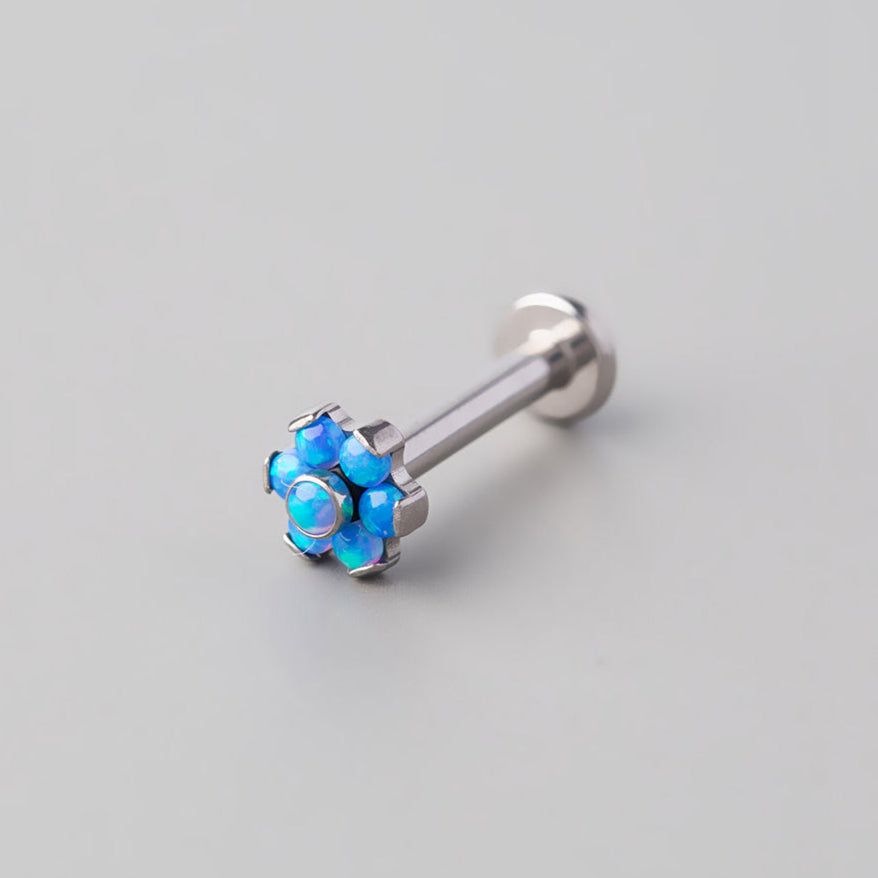
- Implant-grade titanium jewellery from day one. CBJ's helix jewellery range is made from ASTM F136 implant-grade titanium - the same material used in surgical implants. Its biocompatibility means less tissue reaction and faster healing.
- Sterile saline cleaning twice daily. Spray, don't scrub. Leave for 30 seconds, then pat dry with clean tissue. Consistent, gentle cleaning removes bacteria without disturbing the wound.
- Downsizing at the right time. Your initial bar is longer to accommodate swelling (typically 8mm). After 4–8 weeks, return to your piercer for a shorter bar (usually 6mm). A shorter bar reduces the lever effect and prevents snagging.
- Good general health. Adequate sleep, hydration, and nutrition genuinely support healing. Zinc and vitamin C are particularly important for tissue repair.
When Can I Change My Helix Piercing Jewellery?
This is the question everyone wants to answer - and the honest answer is later than you think.
| Timeframe | Can You Change? | Notes |
|---|---|---|
| 0–3 months | ❌ No | The wound is still acutely healing. Changing at this stage almost guarantees a setback. |
| 3–6 months | ⚠️ Only for downsize | Downsize from a longer bar to a shorter one is appropriate - done by your piercer. Do not change the style or material. |
| 6–9 months | ⚠️ With caution | If healed well with zero issues, a professional piercer can change to a different piece of implant-grade titanium. |
| 9–12 months | ✅ Yes, carefully | For most people with uncomplicated healing, this is the safe window for a first style change. Stick to implant-grade titanium or solid 18ct gold. |
| 12+ months | ✅ Yes | Full freedom to change styles - segment rings, circular barbells, hoops and more. Explore CBJ's helix jewellery range. |
The first jewellery change: Always have this done by a professional piercer, not yourself. The fistula can be fragile, and an inexperienced change can introduce a micro-tear that sets healing back by months. Most APP-affiliated UK piercers charge competitive prices–15 for a change.
What Jewellery Is Best for a Healing Helix?
The jewellery you wear during healing has a direct impact on how long it takes. Here is what professional piercers recommend, and what to avoid:
Starter jewellery: A flat-back labret stud (internally threaded or threadless) is the gold standard for initial helix piercing jewellery. It sits flush against the ear, minimises snagging, and is easier to clean than a hoop. The standard initial gauge for a helix is 16G (1.2mm), and the initial length is typically 8mm to allow for swelling.
Once swelling subsides (usually 4–8 weeks), your piercer will downsize to a 6mm bar - this shorter length reduces movement and the risk of catching.
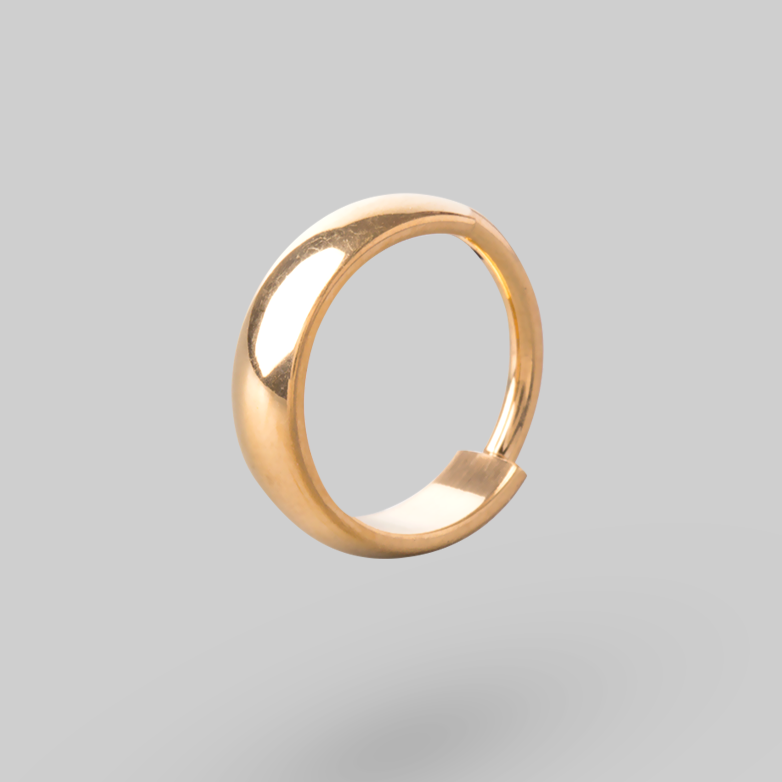
After healing: Once fully healed, the helix suits a wide range of styles. Segment rings, circular barbells, clicker rings, and flat-back labrets are all popular choices. Browse CBJ's helix jewellery collection - all pieces are made from ASTM F136 implant-grade titanium, starting at great value
What to avoid: Surgical steel (potential nickel content), plated metals (coating wears off), acrylic, and any jewellery that isn't formally certified as implant-grade. Read more in our guide to the best material for piercings.
Is My Helix Healing Normally? Signs to Watch For
Normal healing signs (nothing to worry about):
- Clear, white, or pale yellow discharge that dries to a white crust - this is lymph fluid, not infection
- Intermittent tenderness or aching, especially in the first few months
- A small, firm bump right next to the piercing hole (irritation bump) - common and usually resolves with improved aftercare
- Occasional itching as new tissue forms
- Slight redness during the first 4–6 weeks
Signs that need attention:
- Persistent spreading redness beyond the immediate piercing site
- Significant swelling that increases rather than decreases after the first week
- Thick green or yellow pus (opaque, dense, often odorous - distinct from lymph fluid)
- Throbbing pain at rest, not just when touched
- Fever alongside any of the above
If you're seeing true infection signs, visit your GP or a sexual health clinic - do not remove the jewellery, as this can trap infection in the tissue. For any uncertain bump, consult your original piercer first. Most UK professional piercers offer free or low-cost aftercare check-ups. You can also read our detailed post on piercing bumps, keloids and infection - how to tell the difference.
Helix Piercing Aftercare: Step-by-Step
- Wash your hands thoroughly before touching the piercing or nearby area.
- Spray sterile saline (0.9% sodium chloride, such as NeilMed Wound Wash) directly onto the front and back of the piercing.
- Leave for 30 seconds to loosen any dried discharge.
- Gently pat dry with a clean, disposable paper towel. Avoid cloth towels - they harbour bacteria and snag jewellery.
- Repeat twice daily - morning and evening - for the full duration of healing.
- Do not rotate, twist, or slide the jewellery during or after cleaning.
Sterile saline twice daily is the only thing you need. Over-cleaning can actually slow healing. For our complete aftercare guidance, see the complete body jewellery aftercare guide.
Frequently Asked Questions
How long does a helix piercing take to heal?
A helix piercing takes 6 to 12 months to fully heal. The surface can appear healed after 2–3 months, but the internal cartilage continues repairing for far longer. Some people take up to 18 months.
When can I change my helix piercing jewellery?
Wait a minimum of 6 months and ideally 9–12 months before changing helix jewellery. Have the first change done by a professional piercer. We cover this in detail in our helix piercing jewellery guide.
How long does a double helix piercing take to heal?
A double helix done at the same time typically takes 9 to 18 months. If spaced apart (3–6 months between piercings), each heals independently on a 6–12 month timeline.
Why is my helix piercing still not healed after a year?
Cartilage heals slowly by nature. Persistent issues are almost always caused by ongoing trauma (sleeping on it, catching it on hair or towels), jewellery material issues, or changing jewellery too early. Check these factors before assuming something is wrong.
Is a helix piercing bump normal?
Yes - small irritation bumps are very common during helix healing. Most are not keloids. They're caused by trauma (usually sleeping on the piercing) and resolve when the source of irritation is removed. See our guide to piercing bumps vs keloids vs infection.
How do I know if my helix is infected or just irritated?
Irritation presents as a bump, mild redness, and clear-white discharge. True infection involves spreading redness, significant heat, throbbing pain at rest, thick green or yellow pus, and potentially fever. Most helix problems are irritation, not infection.
Can I sleep on my helix while it heals?
No. Sleeping on a healing helix is the top cause of prolonged healing and irritation bumps. Use a travel pillow (with a hole for your ear) or sleep on the opposite side for at least the first 6 months. Read our guide on sleeping with a healing cartilage piercing.
What is the best jewellery for a healing helix?
Implant-grade titanium (ASTM F136) is the gold standard. It is nickel-free, lightweight, hypoallergenic, and certified for use in surgical implants. Avoid surgical steel, plated metals, and acrylic. See our guide on titanium vs steel body jewellery.
How do I clean a healing helix piercing?
Spray sterile saline (0.9% NaCl) twice daily - front and back. Leave for 30 seconds. Pat dry with clean tissue. Do not rotate the jewellery. Do not use alcohol, tea tree oil, or Dettol.
When can I wear earphones with a healing helix?
Avoid in-ear buds for at least 6–8 weeks. They press against the cartilage and introduce bacteria. Over-ear headphones are less problematic but can snag the jewellery. Wait until all visible swelling has gone before reintroducing either.
⭐ Key Takeaways
- A helix piercing takes 6–12 months to fully heal (up to 18 months for complicated cases)
- It looks healed at 2–3 months - but the internal cartilage isn't ready. Don't be fooled.
- Sleeping on the piercing is the #1 cause of extended healing and irritation bumps
- Use implant-grade titanium (ASTM F136) - it makes a genuine difference to healing speed
- Clean with sterile saline twice daily. Never rotate the jewellery.
- Wait 9–12 months before changing jewellery, and have the first change done professionally
- Downsize your bar at 4–8 weeks - ask your piercer if they don't suggest it
- Irritation bumps are common and almost always resolve when the source of trauma is removed
Ready to Change Your Helix Jewellery?
Once healed, the helix suits a huge range of styles - from minimal segment rings to statement circular barbells. All CBJ helix jewellery is made from ASTM F136 implant-grade titanium, starting from varies. Nickel-free, implant-grade, and sterilised before dispatch.
Shop Helix Jewellery at great valueRead Next
Have a question about your helix healing? Email our team at enquiries@camdenbodyjewellery.co.uk - we're happy to help.
Stop The Reaction Before It Starts
90% of piercing irritation comes from poor quality metal. Upgrade to ASTM F-136 Implant Grade Titanium-the biocompatible gold standard used by professional piercers worldwide.
Myths vs. Reality
Myth: "Itchiness means infection."
False. Infection usually involves throbbing pain, heat, extreme swelling, and yellow/green pus. Mild itching alone is rarely an infection.
Myth: "Turn the jewelry to scratch the itch."
Never twist! Twisting breaks the healing seal, introduces bacteria inside the wound, and extends healing time by weeks.
Why Shop Camden?
-

Implant Grade Titanium
ASTM F-136 Compliant
-

Tracked UK Delivery
Free over £40
-

Sterilised Piercing Jewellery
Keeping your skin safe