Snug Piercing: Complete Guide to Pain, Healing, Jewellery & Aftercare (2026)
Snug Piercing: Complete Guide to Pain, Healing, Jewellery & Aftercare (2026)
The snug piercing is one of the most striking cartilage piercings out there. Sitting flush against the inner fold of the ear, it draws the eye without ever feeling flashy, and it pairs beautifully with helix, conch and rook piercings in a curated ear stack. It’s also one of the trickiest piercings to heal, which is why so many people search for solid information before committing. This guide walks you through everything: placement, suitability, pain, healing, jewellery, aftercare, and how to avoid the common pitfalls that cause snug piercings to fail.
What is a snug piercing?
A snug piercing (sometimes called an anti-helix piercing) is a horizontal cartilage piercing that sits along the inner ridge of the antihelix, roughly halfway up the ear. The jewellery passes through a thin vertical fold of cartilage and typically shows only two small bead ends on the front of the ear, one above the other.
Unlike a helix piercing, which passes through the outer rim, the snug is tucked inside the ear’s inner landscape. Unlike a rook, which pierces a deeper fold at the top of the ear, the snug sits lower and works with a shallower piece of cartilage. That shallow depth is exactly what gives the snug its reputation. There’s less tissue to hold the jewellery in place, which means more pressure, more swelling, and a longer settling-in period.
Are you suitable for a snug piercing?
Not every ear is built for a snug. Your piercer will check the thickness and prominence of your antihelix ridge before agreeing to the piercing. If the ridge is very flat, thin or short, the piercing can sit under too much tension, which increases the chance of migration, rejection and persistent bumps.
A good snug candidate usually has:
- A clearly raised antihelix fold that you can pinch between two fingers
- Enough depth of cartilage to allow a curved bar to sit flat without bowing the ear
- No active skin conditions (eczema, psoriasis) in the immediate area
- Patience for a slow heal and a willingness to leave the jewellery alone
If your piercer tells you your anatomy isn’t right for a snug, trust them. A forward helix, rook or anti-tragus can often give you a similar aesthetic with far less risk. Reputable studios turn down snug piercings fairly often, and that’s a sign they know what they’re doing.
How painful is a snug piercing?
Let’s be straightforward. The snug has a reputation as one of the most intense ear piercings, and it earns it. On our pain chart, we’d put a well-performed snug in the 7–9 range on a scale of 10, depending on your anatomy and pain tolerance. Most clients describe a sharp, hot pinch during the piercing itself, followed by a deep throbbing ache that can last several hours and often flares again over the following days.
Swelling is usually more pronounced than with other cartilage piercings, and many people find the area tender to the touch for two to three weeks. That’s not a sign anything is wrong. It simply reflects the amount of cartilage being compressed during the healing phase.
Pain level comparison (ear piercings)
| Piercing | Typical pain (out of 10) | Initial swelling |
|---|---|---|
| Lobe | 2–3 | Minimal |
| Helix | 4–6 | Moderate |
| Tragus | 5–7 | Moderate |
| Forward helix | 5–7 | Moderate |
| Conch | 6–7 | Moderate to significant |
| Rook | 6–8 | Significant |
| Snug | 7–9 | Significant, often prolonged |
| Industrial | 7–9 (two points) | Significant |
Pain is always personal. Anyone who tells you a piercing “doesn’t hurt at all” is probably underselling it, but the good news is that the sharp pain is brief. The longer-lasting discomfort is the throbbing that follows, and that settles down dramatically in the first week or two.
Snug piercing healing time
Official healing times for a snug piercing usually quote 6 to 9 months, but in practice most piercers (ourselves included) suggest planning for 9 to 12 months, and sometimes longer. The snug is a low-tissue, high-tension piercing, so it heals slowly even when you do everything right.
Here’s what to expect, week by week and month by month.
Snug piercing healing timeline
| Stage | What’s happening | What you may notice |
|---|---|---|
| Days 1–3 | Acute inflammation, fresh wound | Redness, heat, throbbing, some bleeding |
| Week 1–2 | Swelling peaks and starts to reduce | Tenderness, clear or straw-coloured fluid (lymph) |
| Week 3–6 | Skin surface forms over the channel | Crusting, itching, less tenderness |
| Month 2–4 | Channel slowly firms up inside | Occasional flare-ups, sleep sensitivity |
| Month 4–6 | Time for a downsize in most cases | Shorter bar sits more comfortably |
| Month 6–12 | Deep healing, tissue strengthens | Feels settled, still avoid trauma |
| Month 12+ | Fully healed for most | Safe to change to a decorative piece |
Treat these as averages rather than promises. A piercing isn’t healed just because the surface looks calm. The channel inside the cartilage heals from the outside in, so the last few months are about letting the deeper tissue consolidate.
Snug piercing jewellery
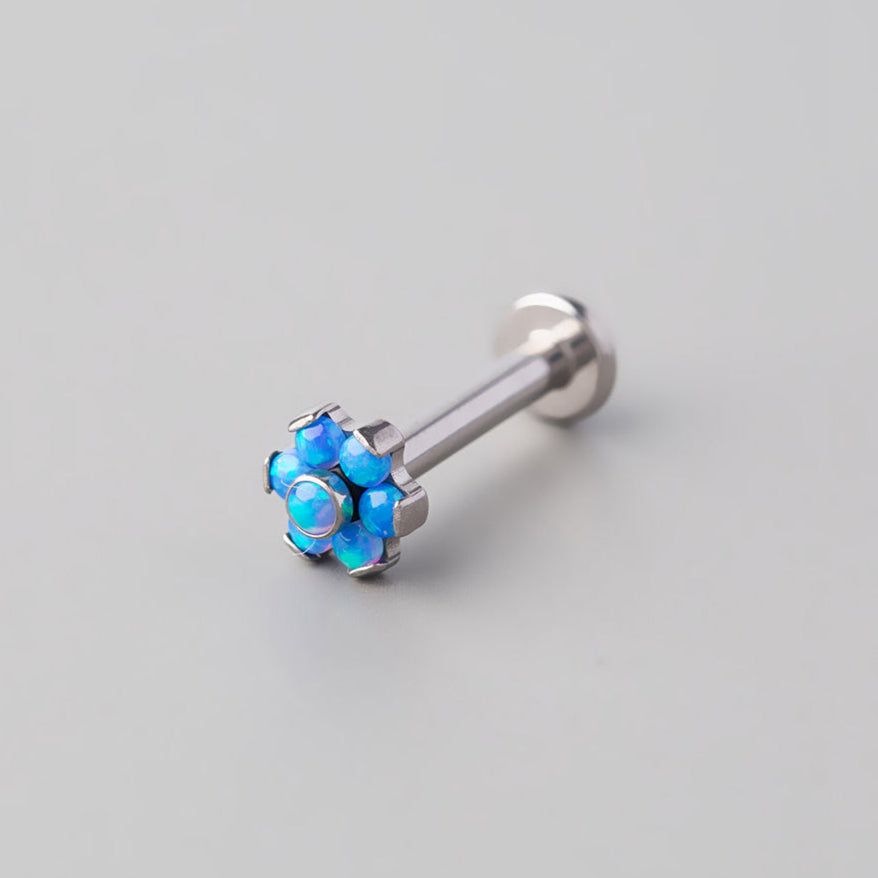
The snug is usually pierced with a curved barbell at 16 gauge (1.2mm). Because of heavy initial swelling, most piercers fit an initial bar that’s slightly longer than the final size, often around 8mm, so the ear has room to puff up without the ends pressing into the skin. Once the swelling subsides, you’ll come back for a downsize to a shorter bar (typically 6mm), which reduces snagging and lets the piercing settle into its permanent position.
Material matters enormously for a cartilage piercing as stubborn as the snug. We strongly recommend implant grade titanium (ASTM F136) for the initial jewellery. It’s biocompatible, extremely lightweight, and nickel-safe, which is crucial when the tissue is inflamed and reactive. Surgical steel is an acceptable alternative for clients with no history of metal sensitivity, but titanium is the gold standard. Avoid plated, mystery-metal or costume pieces during healing at all costs.
Jewellery options for a snug piercing
| Style | When to wear | Notes |
|---|---|---|
| Curved barbell (titanium) | Initial piercing, long-term wear | The standard for a snug. Sits flush against the ridge. |
| Micro curved barbell | Once downsized, fully healed | Smaller balls for a subtler, flatter look. |
| Bioflex curved bar | Clients prone to keloids or sleep issues | Flexible, body-friendly, low-profile. |
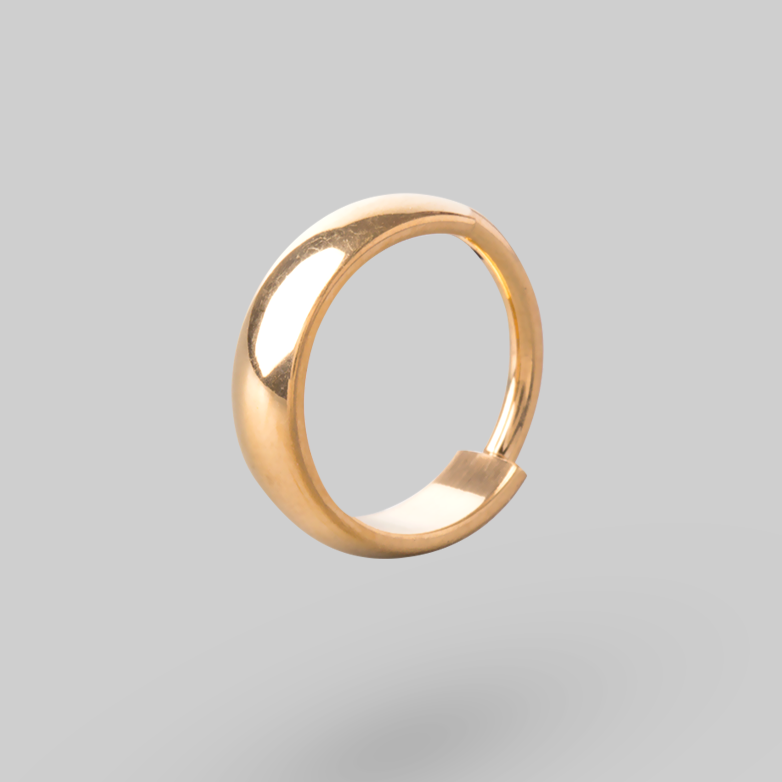
| Seam or clicker ring | Only once fully healed | Possible on some anatomies, not all. Ask your piercer. |
| Straight barbell | Not recommended | Creates tension and increases migration risk. |
For sizing: most healed snugs sit at 16g with a 5–6mm bar and 3mm ball ends, but every ear is different. Always size in person with your piercer before buying a replacement piece. You can browse our full collection of snug piercing jewellery and our wider range of curved barbells when you’re ready for a change.
Snug piercing aftercare, step by step
Aftercare for a snug is the same philosophy as any other cartilage piercing, with a bit more discipline because healing takes longer. The rule of thumb: clean it twice a day, leave it alone the rest of the time.
- Wash your hands with soap and warm water before you go near the piercing.
- Spray sterile saline (0.9% sodium chloride wound wash) onto the front and back of the piercing. Let it soak for 30 to 60 seconds.
- Gently dab dry with a clean, lint-free paper towel or single-use gauze. Never use fluffy cotton towels or cotton buds, which shed fibres into the channel.
- Leave the jewellery in place. Do not rotate, twist or move the bar during healing. This is one of the biggest myths, and it causes far more bumps than it fixes.
- Avoid all cosmetics, hair products, creams and perfumes around the ear.
- Sleep carefully. A travel pillow with the centre removed, or a soft piercing pillow, keeps pressure off the healing side.
- Come back for a downsize once swelling has settled, usually around the 2 to 4 month mark.
For a deeper walk-through of healing principles, our complete piercing aftercare guide is a good companion to this one.
Things to avoid during healing
- Tea tree oil, rubbing alcohol, hydrogen peroxide and antibacterial hand soaps. All are too harsh for a fresh cartilage wound.
- Over-the-ear headphones and tight hats. They press the jewellery into the channel.
- Sleeping on the piercing. Even one rough night can set you back weeks.
- Swimming in pools, hot tubs, lakes or the sea until the piercing is well healed.
- Changing the jewellery yourself before your piercer confirms it’s ready.
- Touching or playing with the bar. Cartilage bumps are overwhelmingly caused by friction and pressure.
Common problems with snug piercings
Because the snug lives on such thin cartilage, it’s prone to the classic cartilage problems: bumps, migration, prolonged redness and, occasionally, full rejection. Most issues are solvable with time, patience, and better aftercare.
Piercing bumps. A small, firm bump next to the jewellery is usually an irritation bump, not a keloid. They’re typically caused by pressure (sleeping on it, headphones, bumps and knocks) or by a bar that’s the wrong length. Address the cause, stick to saline, and the bump often shrinks within a few weeks. If in doubt, read our piercing bump, keloid and infection guide to work out what you’re dealing with.
Migration. If the jewellery looks like it’s slowly moving towards the surface of the ear, that’s migration. It’s more common with snugs than with most other piercings because the cartilage is so shallow. Catch it early by visiting your piercer, and they’ll often be able to save the piercing with a slightly different bar. If it’s gone too far, it’s better to remove the jewellery and re-pierce in the future than to push on and scar the tissue.
Rejection. Full rejection of a snug isn’t rare. If it happens, remove the jewellery, let the area heal, and consider a different piercing placement down the line. It doesn’t mean you’re doing anything wrong, just that the anatomy and the jewellery didn’t agree.
Infection. Genuine infection is actually quite uncommon if you’re cleaning properly. Signs include thick yellow or green discharge, hot red streaks spreading outwards from the piercing, fever, and pain that’s getting worse rather than better. If you suspect infection, speak to your GP. Don’t remove the jewellery unless advised, as this can trap the infection inside.
When can you change your snug piercing?
This is one of the questions we get most often, and the answer is: later than you think. A snug piercing should never be changed by you at home during the initial healing period. Even after the surface looks calm, the channel inside the cartilage is still knitting together.
For most clients, a professional downsize at 2 to 4 months is the first jewellery change. A full change to a decorative bar or ring should wait until your piercer checks the piercing and confirms it’s fully healed, usually 9 to 12 months in. Swapping too early is the number one cause of snug piercings failing after a clean heal.
Downsizing your snug piercing
The downsize is the single most important appointment in your healing journey. When you were first pierced, your piercer used a longer bar to accommodate swelling. Once the swelling has gone, that extra length becomes a liability. A bar that’s too long snags on pillows, catches on hair and clothing, and presses unevenly into the ear, all of which can trigger irritation bumps and migration.
At your downsize appointment, your piercer will measure the settled length of the piercing and fit a shorter bar (usually 5–6mm) in the same material and gauge. It’s quick, painless, and the difference in comfort is immediate. If you can only afford one follow-up during your heal, make it the downsize.
How to sleep with a snug piercing
Sleep is often the hardest part of healing a snug. The ear is small, the jewellery is sensitive, and most of us move in the night without realising. A few practical tips that really do help:
- Use a travel pillow (the horseshoe style) with the centre of the curve positioned so your ear rests in the gap.
- Sleep on your back or on the opposite side as much as possible.
- Change your pillowcase often, ideally twice a week during healing, and consider silk or satin which is kinder to cartilage piercings.
- If you wake up having slept on the piercing, do a saline soak and resist the urge to prod at it.
Snug piercing FAQ
Is the snug the most painful ear piercing?
It’s widely considered one of the top two or three most painful ear piercings, alongside the industrial and the daith. Pain is personal, but the snug’s combination of dense cartilage and shallow tissue does make it feel sharper and more prolonged than a standard helix.
Can everyone get a snug piercing?
No. Your anatomy dictates suitability. A prominent antihelix ridge is essential. If your ear is very flat through the inner fold, a good piercer will steer you towards a different placement rather than take your money for a piercing that’s likely to reject.
How long does swelling last on a snug?
Significant swelling usually settles within 2 to 3 weeks, but the area can still feel tender and puff up at night for a couple of months. Persistent swelling beyond 3 months is worth discussing with your piercer.
Can I wear a hoop in my snug?
Only once it’s fully healed, and only if your anatomy allows it. Most snugs stay in a curved barbell for life because hoops create more movement and tension in an already tension-prone piercing.
Can I exercise with a new snug piercing?
Light exercise is fine. Avoid anything that presses the ear (headbands, boxing, helmets, contact sports) and clean the piercing after heavy sweating with a quick saline soak.
Why does my snug piercing keep bleeding?
A little lymph and occasional pinpoint bleeding in the first week is normal. Ongoing bleeding usually means the piercing is being knocked or slept on. Review your routine and be gentler with the ear.
Can I use tea tree oil on my snug piercing?
No. Tea tree oil is far too harsh for a healing cartilage wound and is a leading cause of dry, angry piercing bumps. Stick to sterile saline.
Can I get a snug piercing alongside other cartilage piercings?
Yes, but not at the same appointment, and not on the same ear as another fresh cartilage piercing. Your piercer will want one piercing to settle before stacking another nearby.
What’s the difference between a snug and a rook?
The rook sits in the upper fold of cartilage above the ear canal. The snug sits lower, on the inner ridge that runs roughly parallel to the ear’s outer edge. They look similar from a distance but are anatomically quite different.
Will my snug piercing close up if I take it out?
Yes, and quickly. In the first year, even 24 hours without jewellery can shrink the channel enough to make reinsertion difficult. After a few years of consistent wear, the channel is more stable but still never permanent. If you want to preserve the piercing, keep something in it.
Key takeaways
- The snug is a horizontal cartilage piercing through the inner antihelix ridge of the ear.
- Pain level is high (7–9 out of 10) and healing takes 9 to 12 months on average.
- Not every ear has the anatomy for a safe snug. Listen to your piercer.
- A curved titanium barbell at 16 gauge is the safest starting jewellery.
- A professional downsize at 2 to 4 months is the single most important follow-up.
- Clean twice a day with sterile saline, leave the jewellery alone, and sleep off it.
- Bumps, migration and rejection are more common on snugs than on most ear piercings, so patience and good aftercare really do pay off.
Shop snug piercing jewellery
Whether you’re just booked in and want to understand your options, or you’re finally ready to change your healed piercing, we stock a full range of implant grade titanium curved barbells, bioflex alternatives and decorative pieces designed specifically for snug and inner-cartilage piercings. Browse our snug piercing collection or explore more curved barbells to find your next piece. All our jewellery is sterilised and designed with healing-friendly materials in mind.
Read next
Stop The Reaction Before It Starts
90% of piercing irritation comes from poor quality metal. Upgrade to ASTM F-136 Implant Grade Titanium-the biocompatible gold standard used by professional piercers worldwide.
Myths vs. Reality
Myth: "Itchiness means infection."
False. Infection usually involves throbbing pain, heat, extreme swelling, and yellow/green pus. Mild itching alone is rarely an infection.
Myth: "Turn the jewelry to scratch the itch."
Never twist! Twisting breaks the healing seal, introduces bacteria inside the wound, and extends healing time by weeks.
Why Shop Camden?
-

Implant Grade Titanium
ASTM F-136 Compliant
-

Tracked UK Delivery
Free over £40
-

Sterilised Piercing Jewellery
Keeping your skin safe