The Complete Guide to Conch Piercing Jewellery: Sizes, Types & What to Buy in 2026
Quick answer: The best jewellery for a conch piercing is a 16 gauge (1.2mm) implant-grade titanium flatback labret stud during healing (6–9 months), then you can switch to a clicker hoop or segment ring (10–14mm inner diameter) once fully healed. Titanium (ASTM F136) is the safest material - it's nickel-free, hypoallergenic, and recommended by the Association of Professional Piercers. At Camden Body Jewellery, we stock over 160 titanium conch pieces at great value with free UK delivery competitive prices
What Is a Conch Piercing?
A conch piercing goes through the bowl-shaped centre of your ear cartilage - the part that resembles the inside of a conch shell, which is how it gets its name. It's one of the most versatile ear piercings you can get because it works equally well with small studs, statement stones, dangle labrets, or full orbital hoops that wrap around the outer rim of your ear.
There are two types. An inner conch is pierced in the deepest part of the ear's bowl, closest to the ear canal - this is the most common type and is usually fitted with a labret stud. An outer conch is pierced on the flatter cartilage between the inner bowl and the helix rim, and it's more commonly fitted with a hoop.
The conch is one of the fastest-growing piercing trends heading into 2026, driven by the popularity of ear curation and constellation-style stacking. At Camden Body Jewellery, we stock over 160 implant-grade titanium pieces that fit conch piercings - this guide covers everything from sizing and materials to aftercare and the latest styles.

What Jewellery Do You Need for a Conch Piercing?
The two main jewellery types for a conch piercing are flatback labret studs and clicker hoops. Your choice depends on whether your piercing is still healing or fully healed, and the look you're going for.
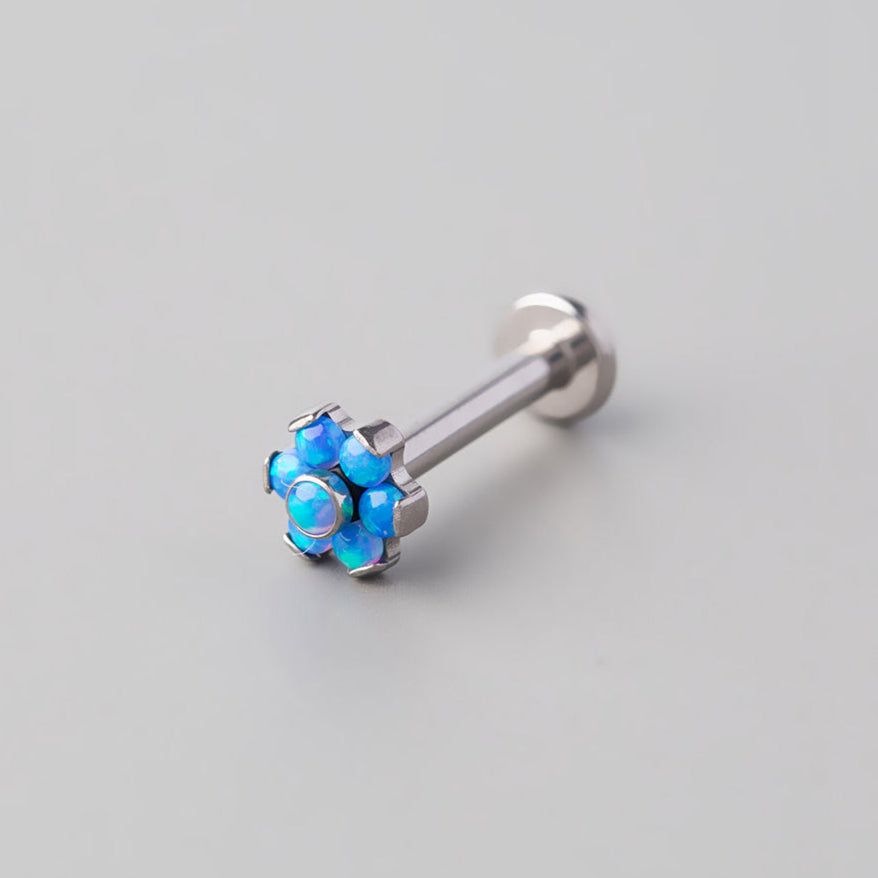
For a fresh or healing conch piercing, a flatback labret stud is the safest and most comfortable option. The flat disc sits flush against the back of your ear, which prevents snagging on hair, pillows, and headphones. Every professional piercer will start you with a labret stud - it keeps movement to a minimum while the cartilage heals.
There are two labret threading systems to know about:
- Internally threaded labrets have the screw thread inside the post, so the smooth end passes through your piercing with no scratching or irritation. You unscrew the decorative top to change it.
- Threadless (push-fit) labrets use a slightly bent pin that clicks into the hollow post, holding the decorative top in place with tension. These are the easiest to swap at home - no screwing, just push and click. Browse our full threadless labret range here.
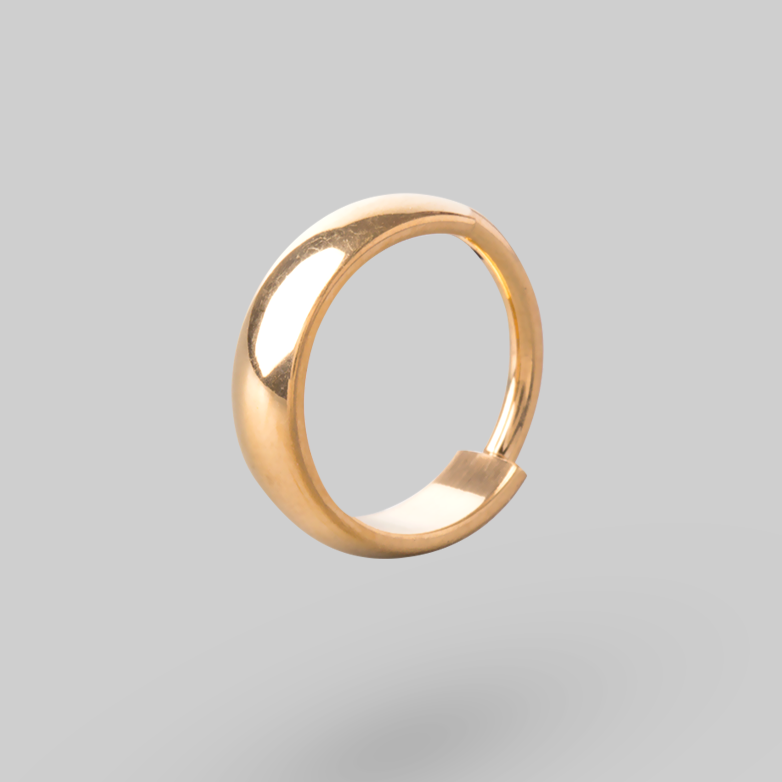
Once your conch is fully healed (typically 6 to 9 months), you can switch to a clicker hoop, segment ring, or circular barbell for a completely different aesthetic. A hoop through the conch wraps around the outer rim of your ear, creating a bold orbital look that's hugely popular in ear stacking. Clicker hoops are the most user-friendly option because they snap open and closed with a hinged mechanism - no tools needed. For more on circular barbells, see our Ultimate Guide to Circular Barbells.
What Size Jewellery Does a Conch Piercing Need?
Most conch piercings use 16 gauge (1.2mm) jewellery, with a labret post length of 6mm to 8mm once healed, or a hoop inner diameter of 10mm to 14mm. Some piercers use 14 gauge (1.6mm) depending on your anatomy.
Conch Piercing Size Chart
| Specification | Initial Piercing | Healed Piercing |
|---|---|---|
| Gauge (thickness) | 16g (1.2mm) or 14g (1.6mm) | 16g (1.2mm) or 14g (1.6mm) |
| Labret post length | 8mm–10mm (extra room for swelling) | 5mm–8mm (6mm is most common) |
| Hoop inner diameter | Not recommended during healing | 10mm–14mm (ear size dependent) |
| Decorative top size | 3mm–4mm (smaller = less catching) | 3mm–6mm (personal preference) |
| Ball/stone size (most common) | 3mm | 3mm–4mm |
Your piercer will fit a slightly longer post initially to allow for swelling. After 6 to 8 weeks, you'll want to downsize to a shorter post - this is a step many people skip, and leaving an oversized bar in actually slows healing because it moves around and irritates the piercing channel. Book a quick downsizing appointment with your piercer rather than attempting it yourself during the healing window.
How to measure your conch for a hoop: once healed, hold a piece of string or thin paper strip from the piercing hole, around the outer edge of your ear, and back to the hole. Measure that distance in millimetres - that's roughly your inner diameter. Most people fall between 10mm and 14mm. If in doubt, go slightly larger - a 12mm hoop gives a relaxed fit that sits comfortably on most ears.
Why Is Titanium the Best Material for Conch Piercings?
Implant-grade titanium (ASTM F136) is the safest material for conch piercings because it contains zero nickel, is hypoallergenic, lightweight, and biocompatible. The Association of Professional Piercers (APP) recommends it as one of the top materials for all initial piercings.
This matters especially for the conch because it goes through thick cartilage with limited blood supply, which means it heals slower than a standard lobe piercing. A reactive material like low-quality steel or plated metal can trigger irritation bumps, prolonged swelling, or infection. Titanium eliminates that risk entirely - it's the same grade used in surgical implants, bone screws, and dental work.
Titanium vs Surgical Steel vs Gold for Conch Piercings
| Material | Nickel Content | Weight | Best For | Typical UK Price |
|---|---|---|---|---|
| Implant-grade titanium (ASTM F136) | None | Very light | All piercings, especially fresh/healing | Varies |
| Surgical steel (316L) | Up to 14% | Heavier | Healed piercings only (if no nickel sensitivity) | Varies |
| Solid 14k/18k gold | Varies by alloy | Medium | Healed piercings, luxury option | Varies+ |
| Gold-plated / PVD coated | Depends on base metal | Varies | Healed piercings only (coating can wear off) | Varies |
At Camden Body Jewellery, every conch piece is made from implant-grade titanium - no plated metals, no mystery alloys, no "surgical steel." Our anodised colours (gold, rose gold, black, rainbow) are a surface treatment of the titanium itself, not a plating that can chip off or expose a reactive base metal underneath.

Conch Piercing vs Helix vs Tragus vs Daith: Which Should You Get?
The conch, helix, tragus and daith are all cartilage piercings, but they differ significantly in placement, pain level, jewellery options, healing time and snagging risk.
| Piercing | Placement | Pain (1–10) | Healing | Best Jewellery | Snagging Risk |
|---|---|---|---|---|---|
| Conch | Inner bowl of the ear | 5–7 | 6–9 months | Labret studs, clicker hoops | Low |
| Helix | Upper outer rim | 4–5 | 3–6 months | Labret studs, hoops, huggie earrings | Medium (hair, hats) |
| Tragus | Small flap over ear canal | 5–6 | 4–8 months | Small labret studs, micro hoops | Low |
| Daith | Innermost cartilage fold | 5–7 | 6–12 months | Clicker rings, curved barbells, segment rings | Very low |
| Rook | Ridge above the daith | 6–7 | 6–12 months | Curved barbells, clicker rings | Very low |
The conch is the most versatile of these five because it supports both studs and full orbital hoops, sits in a naturally protected area of the ear, and provides a large flat canvas for decorative tops or constellation stacking. If you're planning a curated ear stack, the conch is often the centrepiece that ties everything together.
The daith is worth considering if you prefer rings over studs - daith piercings almost always use curved or circular jewellery. The helix is the easiest cartilage piercing for beginners, but it's more prone to snagging on hair and hats. The rook sits deep in the ear and is excellent for people who want a piercing that's virtually impossible to catch on anything.
How Much Does a Conch Piercing Hurt?
Most people rate conch piercing pain at 5 to 7 out of 10. It goes through one of the thickest sections of ear cartilage, so the needle requires slightly more pressure than a helix or lobe piercing. The actual piercing takes about one second - the sharp sensation is brief, followed by a warm, throbbing feeling that typically fades within an hour.
Pain tolerance varies significantly between individuals. Some people describe it as a firm pressure with a quick sting, while others find it more intense. It's generally considered mid-range for cartilage piercings - not as intense as an industrial barbell (which passes through two cartilage points) but noticeably more than a standard lobe.
Tips to reduce pain on the day:
- Eat a proper meal 1–2 hours before your appointment. Low blood sugar makes pain feel significantly worse and increases the chance of feeling lightheaded.
- Avoid caffeine and alcohol for 24 hours beforehand. Both thin your blood, which increases bleeding and swelling.
- Don't take aspirin or ibuprofen before the appointment - these are blood thinners. Paracetamol is fine if you want something beforehand.
- Breathe steadily. Your piercer will likely ask you to take a deep breath in, then pierce on the exhale. Follow their lead.
How Long Does a Conch Piercing Take to Heal?
A conch piercing takes 6 to 9 months to fully heal, though some people may need up to 12 months. Cartilage has significantly less blood supply than the earlobe, which is why the timeline is so much longer. The piercing may look healed on the outside after 3–4 months, but the internal cartilage channel (fistula) takes much longer to fully mature.
Conch Piercing Healing Timeline
| Stage | Timeframe | What to Expect |
|---|---|---|
| Inflammatory | Week 1–2 | Swelling, redness, warmth, mild throbbing. This is normal. |
| Proliferative | Week 2–8 | Swelling subsides. Clear or pale yellow discharge (lymph fluid) is normal - this is not pus. |
| Downsizing | Week 6–8 | Visit your piercer to switch to a shorter labret post now that swelling has resolved. |
| Maturation | Month 3–9+ | Looks healed externally but the internal channel is still strengthening. Don't change jewellery yet. |
| Fully healed | Month 6–12 | No tenderness, no discharge, no crusties. Safe to change jewellery and switch to hoops. |
Conch Piercing Aftercare
- Clean twice daily with sterile saline solution (0.9% sodium chloride) - nothing else. No tea tree oil, no alcohol, no hydrogen peroxide, no Savlon. These products damage healing tissue and slow recovery.
- Dry the area after cleaning. Moisture trapped around the piercing encourages bacteria. Gently pat dry with a clean paper towel or use a hairdryer on a cool, low setting from a distance.
- Don't sleep on it. Use a travel pillow or donut pillow to keep pressure off the ear. Consistent pressure is the number one cause of irritation bumps on conch piercings.
- Avoid headphones that press on the piercing. Over-ear headphones that sit on the outer ear can press a conch stud inward. Use standard earbuds (not AirPods Pro) or bone conduction headphones during healing.
- Don't twist or rotate the jewellery. Old advice said to rotate your piercing - this is now known to be harmful. It disrupts the fistula forming around the post.
- Downsize your bar at 6–8 weeks. This is one of the most important and most overlooked steps. A long bar that's no longer needed for swelling will move around and cause irritation bumps.
- Keep hair products away. Hairspray, dry shampoo, and conditioner can build up around the piercing and cause irritation. Cover the ear or rinse carefully after applying products.
- Avoid swimming for at least 3 months. Pools, hot tubs, lakes, and sea water all carry bacteria and chemicals that can cause infection in an open wound.
If you notice persistent redness, swelling, or discharge beyond the first few weeks, check out our Piercing Care Guide, our guide on why piercings itch, or our article on Piercing Bump vs Keloid vs Infection.

Do Conch Piercings Reject?
Conch piercings have a very low rejection rate because the thick cartilage provides a stable anchor point for the jewellery. Rejection - where the body pushes the jewellery out - is far more common in surface piercings (navel, eyebrow, bridge) where the jewellery only passes through a thin fold of skin.
That said, rejection can still occur in rare cases. The most common causes are: jewellery made from reactive metals (especially nickel-containing steel), a piercing placed too shallowly, or repeated physical trauma to the area. Using implant-grade titanium and choosing a reputable, experienced piercer are the two most effective ways to prevent rejection.
Signs of rejection include the bar appearing to shorten (more bar visible), the skin between the entry and exit becoming thinner or red, and the piercing slowly migrating toward the skin's surface. If you notice any of these, see your piercer immediately - early intervention can sometimes save the piercing.
What Are the Best Conch Piercing Styles for 2026?
The biggest conch piercing trends for 2026 are constellation stacking, dangle labrets, mixed-metal ear curation, and orbital conch hoops.
Constellation stacking involves placing multiple small studs in and around the conch to create a star-like pattern. Pair two or three minimalist CZ labrets at slightly different positions for a curated, editorial look. The conch is ideal for this because the flat cartilage surface gives your piercer room to place multiple piercings without crowding. Each one can hold a different decorative top - mix sizes, stones, or colours for a completely unique setup.
Dangle labrets add movement and personality. Our Ball Top Bezel Dangle Labret in Gold (varies) and Emerald CZ Chain Dangle Labret (varies) are designed for exactly this - they catch the light without being too heavy for daily wear. Choose a dangle that hangs no longer than 10–12mm so it doesn't extend past your earlobe.
Mixed-metal stacking is replacing the old rule of matching all your jewellery to one colour. Combining silver and gold titanium pieces across your ear creates a modern, intentional look. Because our titanium pieces are anodised (not plated), you can mix metals without worrying about different materials reacting with your skin.
Orbital conch hoops remain a classic statement. A single clicker ring or segment ring through the conch that wraps around the outer ear creates a dramatic effect. This works equally well as a standalone piercing or as the anchor of a multi-piercing ear setup.
How Much Does a Conch Piercing Cost in the UK?
A conch piercing typically costs Varies at a reputable studio in the UK, which usually includes basic starter jewellery. Prices vary by location - London studios tend to charge more - and by the quality of the included jewellery.
For replacement and upgrade jewellery, implant-grade titanium conch pieces at Camden Body Jewellery range from Varies. That's for genuine ASTM F136 titanium - the same grade recommended by professional piercers and the APP. You don't need to spend varies–50 on a single piece from a piercing studio when the same quality material is available for a fraction of the price.
Once healed, having a few different conch pieces to rotate gives you daily versatility - a simple CZ stud for work, a dangle labret for going out, and a hoop for weekends. At our prices, building a small rotation is affordable.
How to Change Your Conch Piercing Jewellery
Wait until your conch is fully healed (minimum 6 months, ideally 9) before changing jewellery, and always wash your hands thoroughly with antibacterial soap first.
For threadless (push-fit) labrets:
- Hold the flat back disc behind your ear with one hand.
- Gently pull the decorative top straight out from the front. It should slide out smoothly.
- To insert the new top, slightly bend the pin on the back of the new end - about 15 degrees is enough.
- Push the pin firmly into the hollow labret post until you feel it click into place. The bend creates tension that holds it securely.
For internally threaded labrets:
- Hold the flat back disc behind your ear.
- Unscrew the decorative top anti-clockwise (left). It should come off with a few turns.
- Screw the new top on clockwise (right) until finger-tight. Don't overtighten.
For clicker hoops:
- Find the hinged opening point on the ring (there's a small gap or notch).
- Gently pull it open - don't force it or bend it out of shape.
- Slide the ring through your piercing hole.
- Click it shut. You should hear and feel a definite snap when it locks closed.
If you're struggling, don't force it. Your piercer will usually change jewellery for free or a small fee. It's always better to ask for help than to irritate the piercing by wrestling with a stubborn piece.
Conch Piercing Pros and Cons
The conch is one of the most popular ear piercings for good reason, but it's not without trade-offs.
| Pros | Cons |
|---|---|
| Extremely versatile - works with studs, dangles, and hoops | Longer healing time (6–9 months) compared to lobes |
| Low snagging risk - sits in a protected area of the ear | More painful than lobe or helix piercings |
| Works as a standalone or part of a curated ear stack | Headphone use is limited during healing |
| Suits almost every ear shape and size | Requires a downsizing visit at 6–8 weeks |
| Statement hoop option is unique to the conch (orbital look) | Can't sleep on that side during healing |
| Very low rejection rate compared to surface piercings | Higher infection risk than lobes (cartilage has less blood flow) |
Frequently Asked Questions
Can I wear AirPods with a conch piercing?
Not during healing. Standard AirPods sit in the ear canal and usually don't touch the conch, but AirPods Pro with silicone tips can press against a conch piercing and cause irritation. Wait until fully healed (6–9 months) before testing earbuds, and switch to over-ear headphones or bone conduction headphones during the healing period.
Can I get a conch piercing on both ears?
Yes, but most piercers recommend doing one ear at a time so you have a side to sleep on while the other heals. Getting both simultaneously means 6–9 months of very careful sleeping positions, which most people find difficult to maintain.
What's the difference between inner conch and outer conch?
The inner conch is the deep bowl of the ear (most common), while the outer conch is the flatter area between the inner bowl and the helix rim. Inner conch piercings work best with labret studs; outer conch piercings are often paired with hoops. Most people who say "conch piercing" are referring to the inner conch.
Can I change my conch jewellery myself?
Once fully healed, yes. Threadless labrets are the easiest to swap at home - the post stays in your ear while you push on a new decorative top. Our threadless labret range is designed for exactly this kind of quick, at-home styling. For hoops, clicker rings are the most user-friendly since they snap open and closed without tools.
Is a conch piercing worth it?
For most people, yes. The conch is one of the most versatile piercings you can get - it works with studs, dangles, and full orbital hoops, sits in a naturally protected area, and suits almost every ear shape. The healing time is longer than a lobe, but the end result is a piercing with more styling options than almost any other cartilage placement.
What gauge is a conch piercing?
Standard conch piercings are 16 gauge (1.2mm). Some piercers use 14 gauge (1.6mm) depending on your anatomy, the thickness of your cartilage, and the jewellery style you want. Always confirm your gauge with your piercer before buying replacement jewellery - wearing the wrong gauge can cause discomfort or damage the piercing channel.
Is titanium or surgical steel better for a conch piercing?
Implant-grade titanium (ASTM F136) is significantly better. Surgical steel (316L) can contain up to 14% nickel, which frequently causes allergic reactions in cartilage piercings - and because the conch heals slowly, any reaction is amplified. Titanium is completely nickel-free, lighter in weight, and is the material specifically recommended by the Association of Professional Piercers for all initial piercings.
Can I swim with a conch piercing?
Avoid swimming for at least 3 months after getting a conch piercing. Pools contain chlorine and bacteria, hot tubs are worse, and natural water (lakes, sea) carries the highest infection risk. If you absolutely must swim, cover the piercing with a waterproof wound seal bandage - but avoiding water exposure entirely during healing is the safest approach. For more detail, see our guide on swimming with piercings.
Do conch piercings reject?
Very rarely. The thick cartilage of the conch provides a stable anchor, making rejection far less likely than with surface piercings. The main risk factors for rejection are reactive metals (especially nickel-containing steel), too-shallow placement, and repeated trauma. Using implant-grade titanium and going to an experienced piercer essentially eliminates this concern.
Can conch piercings help with migraines?
There is no scientific evidence that conch piercings help with migraines. You may have seen this claim online - it's sometimes confused with daith piercings, which are anecdotally (but not clinically) associated with migraine relief due to their proximity to a vagus nerve pressure point. The conch is in a different location entirely. Get a conch piercing because you want one, not for medical reasons.
Key Takeaways
- Best starter jewellery: 16g implant-grade titanium flatback labret, 8–10mm post length
- Healed jewellery: 16g labret (5–8mm post) or clicker hoop (10–14mm inner diameter)
- Healing time: 6–9 months. Clean with saline only, downsize at 6–8 weeks, don't sleep on it
- Best material: ASTM F136 titanium - nickel-free, APP-recommended, at great value at Camden Body Jewellery
- Pain level: 5–7 out of 10, lasts about one second
- UK piercing cost: Varies including basic jewellery. Upgrade pieces at great value–varies
Last updated: March 2026. Written by the team at Camden Body Jewellery, specialists in implant-grade titanium body jewellery since 2019. This guide is for informational purposes and does not replace advice from a qualified professional piercer. Always consult an experienced, reputable piercer for personalised recommendations about your anatomy and aftercare.
Stop The Reaction Before It Starts
90% of piercing irritation comes from poor quality metal. Upgrade to ASTM F-136 Implant Grade Titanium-the biocompatible gold standard used by professional piercers worldwide.
Myths vs. Reality
Myth: "Itchiness means infection."
False. Infection usually involves throbbing pain, heat, extreme swelling, and yellow/green pus. Mild itching alone is rarely an infection.
Myth: "Turn the jewelry to scratch the itch."
Never twist! Twisting breaks the healing seal, introduces bacteria inside the wound, and extends healing time by weeks.
Why Shop Camden?
-

Implant Grade Titanium
ASTM F-136 Compliant
-

Tracked UK Delivery
Free over £40
-

Sterilised Piercing Jewellery
Keeping your skin safe